How to choose a saddle pad: shape, size, fabric
Dressage pad or jumping pad, how to size one to your saddle, which fabrics take the sweat, and why an expensive pad will not rescue a bad saddle.
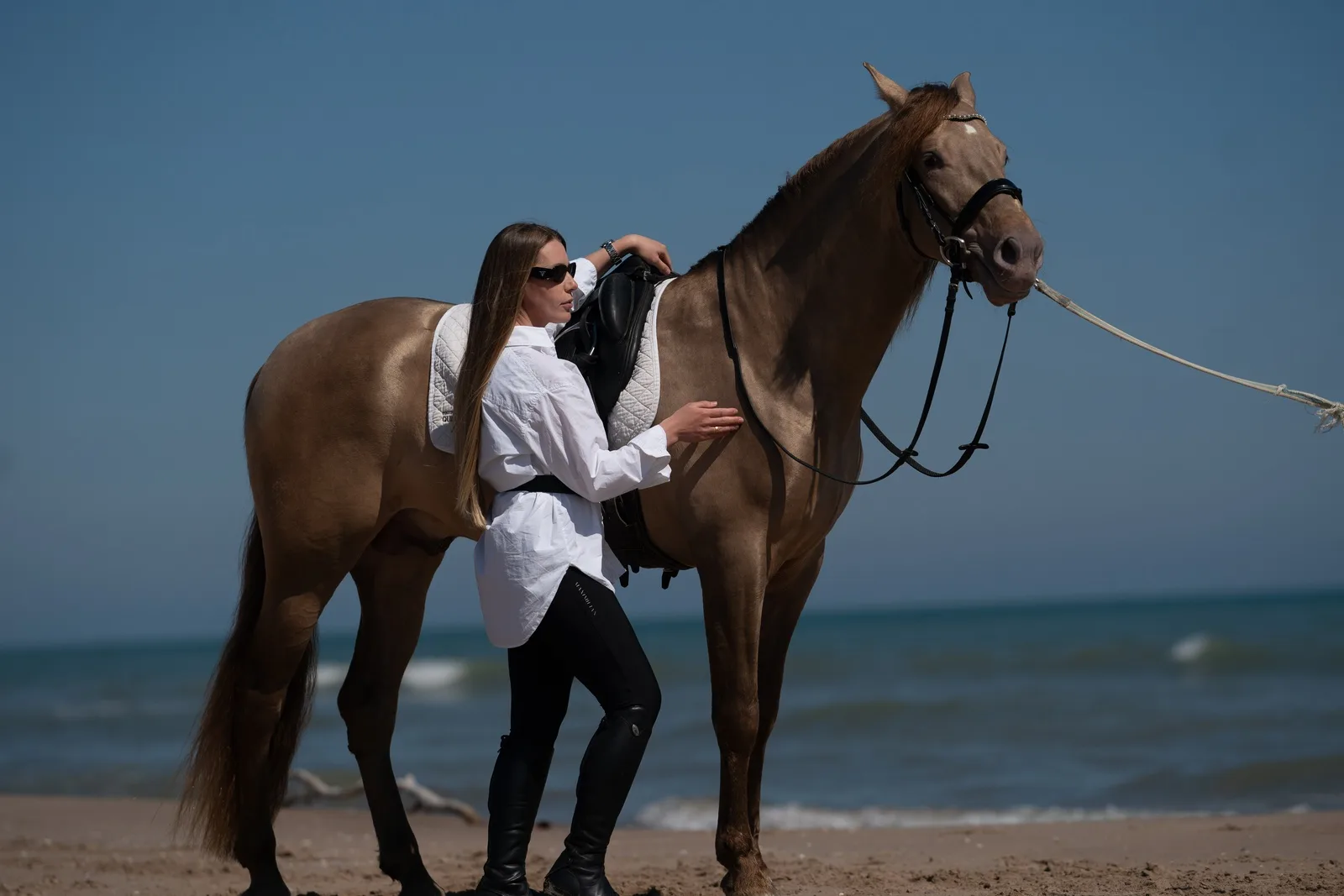
A saddle pad looks like the item you pick by colour. In practice it does two jobs: it spreads pressure under the saddle and it takes the sweat. Getting it wrong gives you a rubbed back, not merely an untidy turnout.
A word on names first. In Britain the shaped one under the saddle is a numnah and the square one is a saddle cloth; in the United States both are a saddle pad. I will say saddle pad throughout and mean all of them.
Shape: dressage or jumping
The shape follows the cut of the saddle, and it does not work the other way round.
Dressage. Long and straight along the bottom edge, cut deep down the side. For a dressage saddle with a long straight flap. Under a jumping saddle it sticks out well in front and behind.
Jumping. Shorter, with the front edge cut away for a forward flap. For jumping and general purpose saddles.
General purpose. The compromise. It works under a GP saddle and looks slovenly under anything else.
Shaped numnah. Cut to the outline of the saddle itself, with nothing projecting. It photographs well and ventilates worse.
Half pad. Not a substitute for either. It goes on top of the pad, under the saddle, and it belongs in the paragraph further down about what a pad cannot do.
Size
Sizes are marked pony, cob, full, extra full, and they mean different things from one brand to the next. Do not go by the letters. Go by two measurements.
How to measure: the length along the spine from the wither to the back edge, and the drop from the spine to the bottom edge.
Guide figures for a horse of about 15.3 to 16.1 hh, which is a typical PRE:
| Measurement | Dressage | Jumping |
|---|---|---|
| Length along the back | 23–24.5" (58–62 cm) | 21–23" (54–58 cm) |
| Drop down the side | 21.5–23.5" (55–60 cm) | 19–20.5" (48–52 cm) |
The fitting rule: the pad clears the edge of the saddle by about an inch all round. Less than that and the edge of the saddle presses on skin. More and the spare fabric gathers into a fold, and a fold under a saddle rubs faster than a bare back does.
The wither
The most important part, and the part most often ignored.
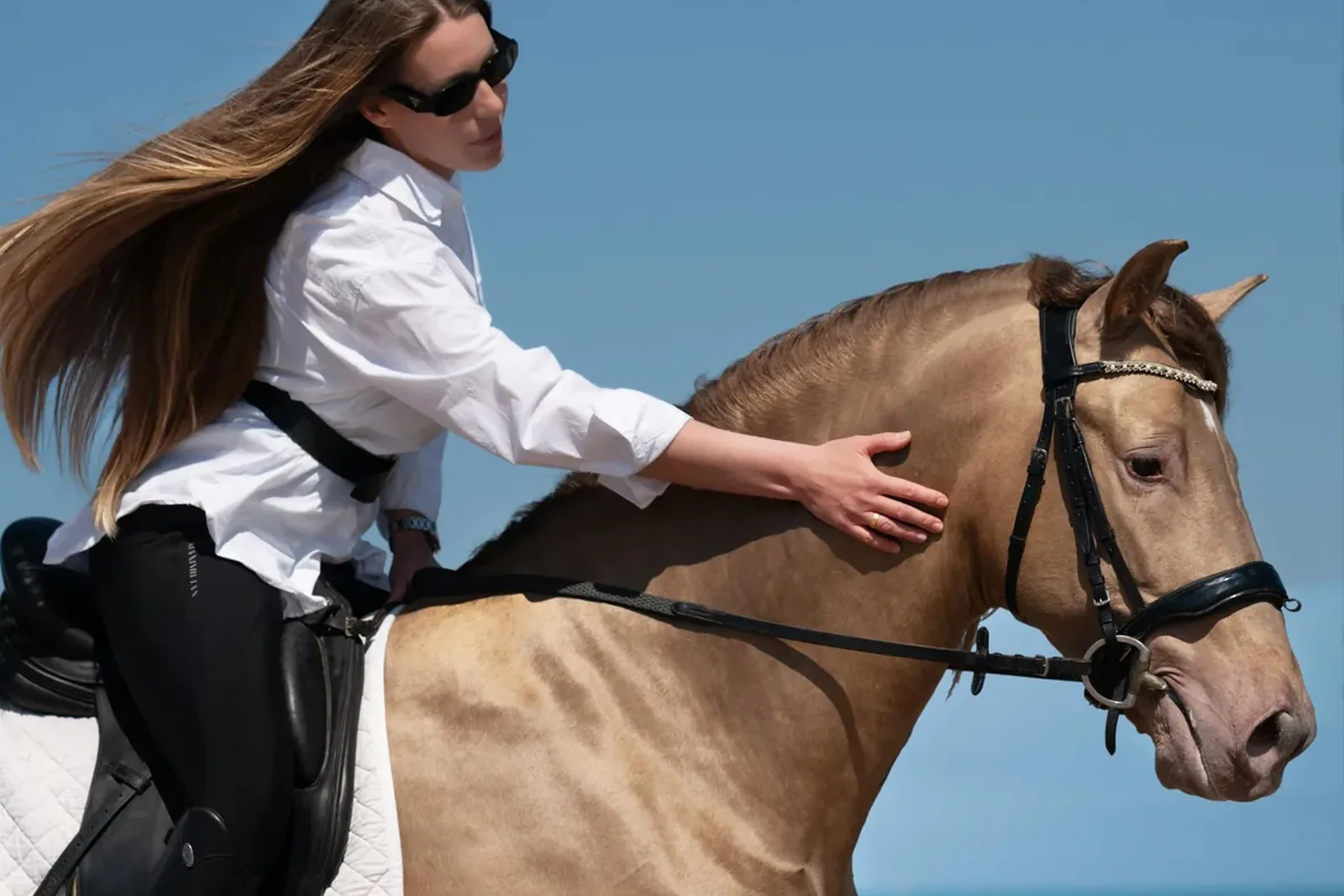
A pad is never pulled flat across the withers. Before you do the girth up you lift it up into the gullet of the saddle so that there is daylight over the wither. Otherwise the fabric is pressed onto the wither by the rider's weight, and in a month there is a white patch there where the hair has gone.
Horses with high withers — and the Iberian breeds have high withers — want a pad with a cut-back or anatomically shaped topline. It is worth paying for. A pressed-down wither is one of the two or three marks that never grow out.
Fabric and lining
The outer and the lining are solving different problems.
Cotton and cotton drill. Breathes, absorbs, washes easily. It shrinks in the first few washes, so buy with room or wash at 30°C.
Synthetic, polyester. Does not shrink and dries fast, but takes sweat less well. On long work the back gets clammy under it.
Natural felt or wool lining. The classic. It distributes pressure very well, it is heavy, and it takes a long time to dry.
Gel and foam inserts. They help when the saddle fit is imperfect, and they are a crutch: they compensate rather than cure.
Sheepskin edging. Not about sweat but about friction: it stops the rub along the edge of the flap. Real sheepskin costs more and works; synthetic is just a soft edge.
How many you need
The practical minimum is three. One on the horse, one in the wash, one dry in the cupboard.
Wash it every second session, and in hot weather after every one. Dried sweat turns the fabric into sandpaper, and the rubbing starts there.
Wash without fabric conditioner: it coats the fibres and the cloth stops absorbing. Detergent residue does the same thing, so run an extra rinse rather than an extra dose.
What a saddle pad does not do
It does not fix a saddle that does not fit. If the saddle presses, a gel insert moves that pressure onto the next patch of muscle, and that is all it does. A saddle is fitted to a particular back, and refitted when the horse gains or loses condition. That is a subject of its own: how to fit a saddle.
It does not replace grooming. A grain of sand under a pad rubs exactly as it would under a bare saddle.
It does not hold its shape for ever. Flattened felt and collapsed quilting stop distributing anything. A pad is a consumable, not an investment.
How to check you got it right
After work, take the saddle off and look at the back.
Evenly damp — the pressure is spread correctly.
Dry patches on a sweaty back — the pressure there is too high and the circulation is shut down. That is a signal to have the saddle checked, not to buy another pad.
White hairs after a few weeks — the fabric or the saddle has rubbed the hair back to the follicle. Next comes a bald patch, and it is permanent.
About this article
I do not sell tack and I do not make it. My pads are my own working ones. I wrote this because the question about size and shape comes up almost more often than questions about colour and breeding, and the answers online are mostly brand copy.
What I actually do is on the services page.