How much does a horse cost
Purchase prices in Europe and the US, what PRE costs at a Spanish stud, the one-off costs buyers forget, monthly keep, and why a cheap horse ends up dearer.
"How much does a horse cost" sounds like a question about the purchase price. The purchase is the smaller half of the money. Below are both figures: what you pay once, and what you pay every month for as long as you own the horse.
The purchase price
The spread is enormous, and it is explainable. Price comes down to four things: breed and origin, age and training, health, and demand for that particular type.
Europe and the United States, 2026 order of magnitude:
| What | Europe | USA |
|---|---|---|
| Unregistered horse, light work or companion | €1,500–5,000 | $2,000–6,000 |
| Registered riding horse, started, quiet | €8,000–20,000 | $12,000–25,000 |
| Amateur competition horse with a record | €25,000–60,000 | $30,000–75,000 |
| Professional-level sport horse | from €80,000 | from $100,000 |
PRE in Spain, bought from the breeder:
| What | Price |
|---|---|
| Foal under a year | €4,000–8,000 |
| Two or three years old, started | €10,000–20,000 |
| With a breeding qualification or a competition record | from €25,000 |
Two things surprise buyers coming from the American market. Spanish prices at the stud are lower than the same quality in the US or Germany, and the gap closes the moment you add transport. And a horse bought in Spain is usually younger and less finished than the equivalent price in Wellington or Aachen — Spanish breeders sell horses, not programmes.
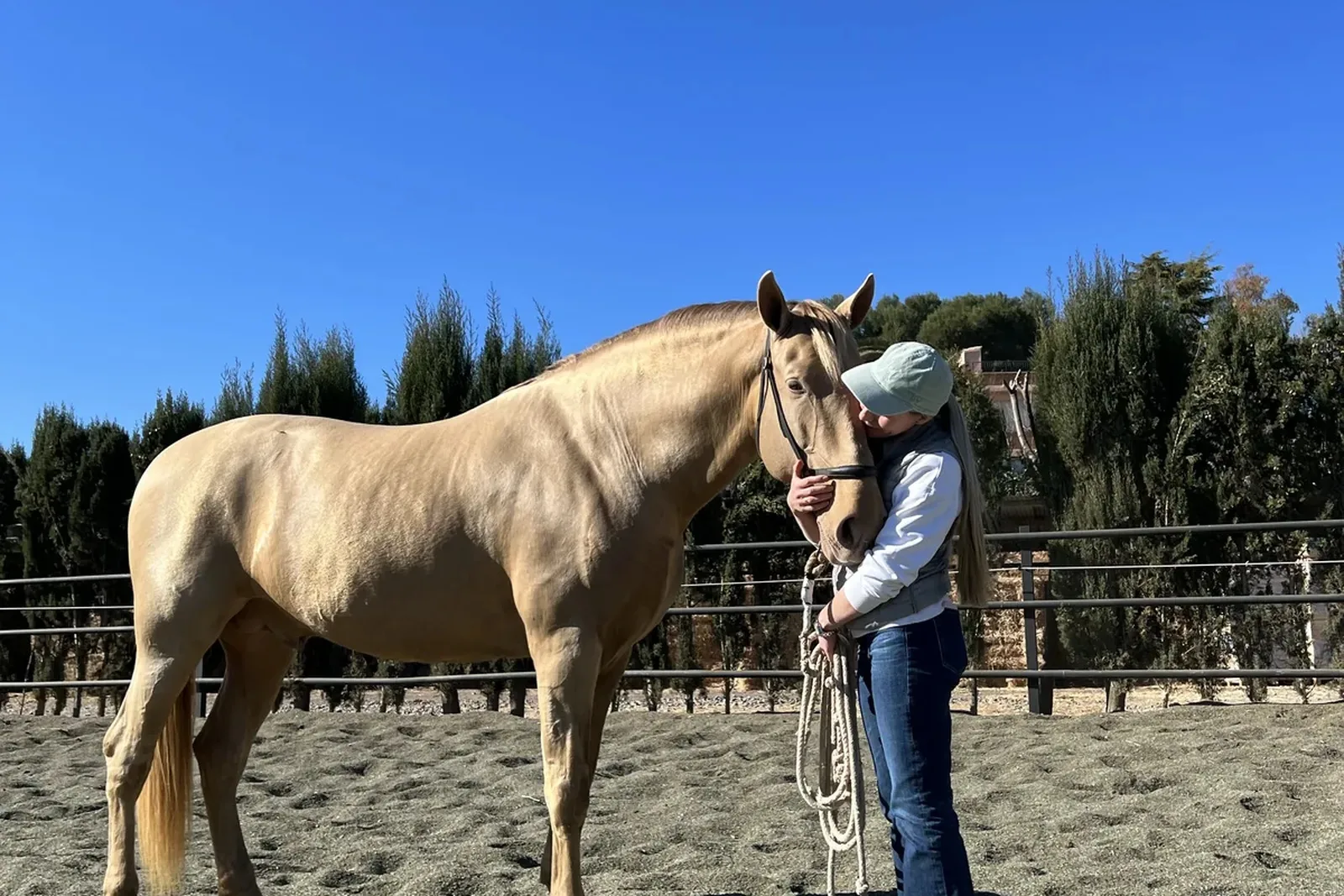
On colour: a rare coat colour adds visibly to the price. All else equal, a double pearl or a palomino sells for one and a half to two times the price of a bay of the same age and line. That is not a surcharge for looks. Dilute coat colours are genuinely rare in the breed and demand for them holds.
What to add to the purchase price immediately
One-off costs that people forget to budget.
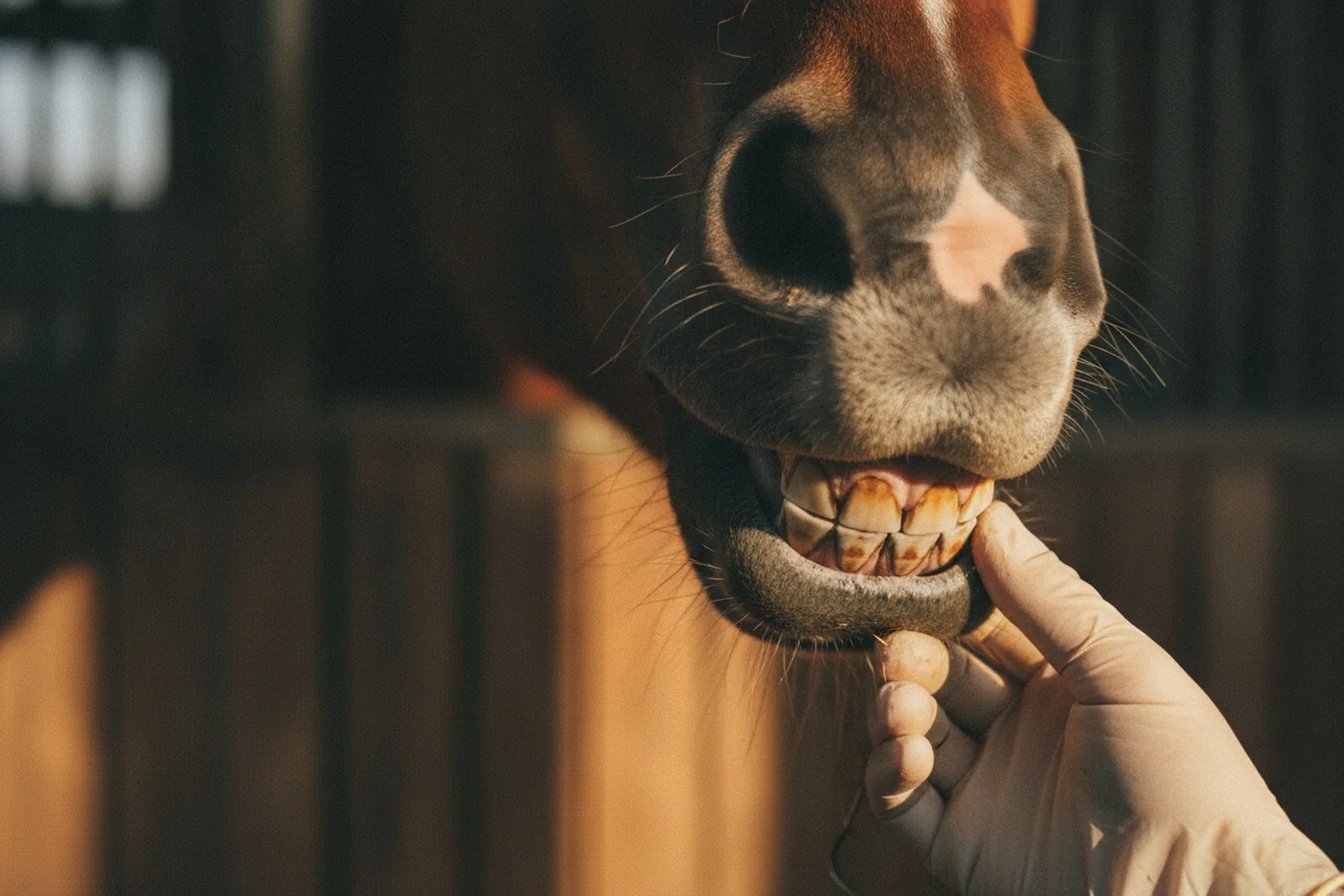
Pre-purchase exam — €400–900 in Spain for a clinical exam with basic radiographs. In the US, $500–1,500 for a basic PPE and $2,500–4,500 for a full set of films and bloodwork. Saving money here is the most expensive decision in the whole process.
Transport. Road transport inside the EU, Spain to Germany or the Netherlands: €1,500–3,500 depending on whether the horse travels alone. Spain to the United States by air: $12,000–20,000 including the flight, the groom, and the mandatory USDA import quarantine. Export paperwork adds around €1,000.
Quarantine on import into the US. Three days minimum for geldings, and CEM quarantine for mares and stallions runs two to three weeks at an approved facility — budget $3,000–6,000. Requirements change; confirm with APHIS before you pay for the horse, not after.
Tack. Saddle, bridle, pads, headcollar, boots, rugs. A new mid-range set starts around €2,500 or $3,000; used is roughly half. Note that a saddle is fitted to a specific back, so you cannot buy it in advance.
What it costs to keep
This is the figure that decides whether you can afford the horse at all. Per month, at commercial livery rates.
| Item | Europe, per month | USA, per month |
|---|---|---|
| Full board — stall, feed, mucking out | €400–900 | $600–1,400 |
| Farrier, shoes or trim | €60–140 | $80–200 |
| Routine vet | €30–60 | $50–100 |
| Supplements | €30–70 | $40–90 |
| Professional rider, if you do not ride daily | €300–800 | $500–1,200 |
| Insurance, mortality plus major medical | €40–90 | $50–120 |
| Total | €560–2,060 | $820–3,110 |
Rates vary by region more than by country. Rural Spain, Portugal and central France sit at the bottom of the European range. The Netherlands, southern England and the areas around German sport centres sit at the top. In the US, pasture board in Kentucky or Ocala is a different economy from full board in New Jersey or Southern California.
On top of that, once a year: vaccinations, dentist, worming, a Coggins test if you are in the US and plan to cross state lines, replacement tack, and unplanned treatment. A sensible reserve is €2,000 or $3,000 a year over and above the regular spend.
Annual total without a professional rider: from €8,000 or $11,000. With one: from €14,000 or $20,000. That is more than a horse costs at the bottom of the market, and it is normal. The purchase happens once; the keep is forever.
Why a cheap horse usually costs more
The classic trap. A €3,000 horse and a €30,000 horse cost exactly the same to keep — the difference in purchase price is erased inside the first year or two.
Meanwhile the cheap horse is more often:
- bought without a pre-purchase exam, so the problems surface later;
- unstarted or badly started, and correcting bad work costs more than starting a horse from scratch;
- unregistered, which means there is nothing to sell it on with.
The difference in price disappears within a year. The difference in quality stays for the life of the horse.
What the price does not depend on
Three things people pay for that are not worth money.
A grand name in the fifth generation. At that distance the ancestor affects nothing except the advertisement. How to read a pedigree is a separate article.
Photographs. A good photographer raises the price of the listing, not of the horse.
The words "promising" and "with potential". Potential cannot be verified and cannot be resold.
What to do before you buy
First: budget the keep, then the purchase. If the monthly figure does not work, it is too early to buy.
Second: add 20 % to the first year over your plan. Something always comes up.
Third: do not spend the whole budget on the horse. A horse you cannot afford to ship is somebody else's horse.
If you are looking at a Spanish horse, I have written the import route separately — what it takes to bring a horse into the EU, and where to buy in the first place.