Horse temperament: what you can judge before buying
What an hour of viewing really shows and what it cannot, why temperament is heritable but not predictable from a pedigree, and the questions to ask a seller.
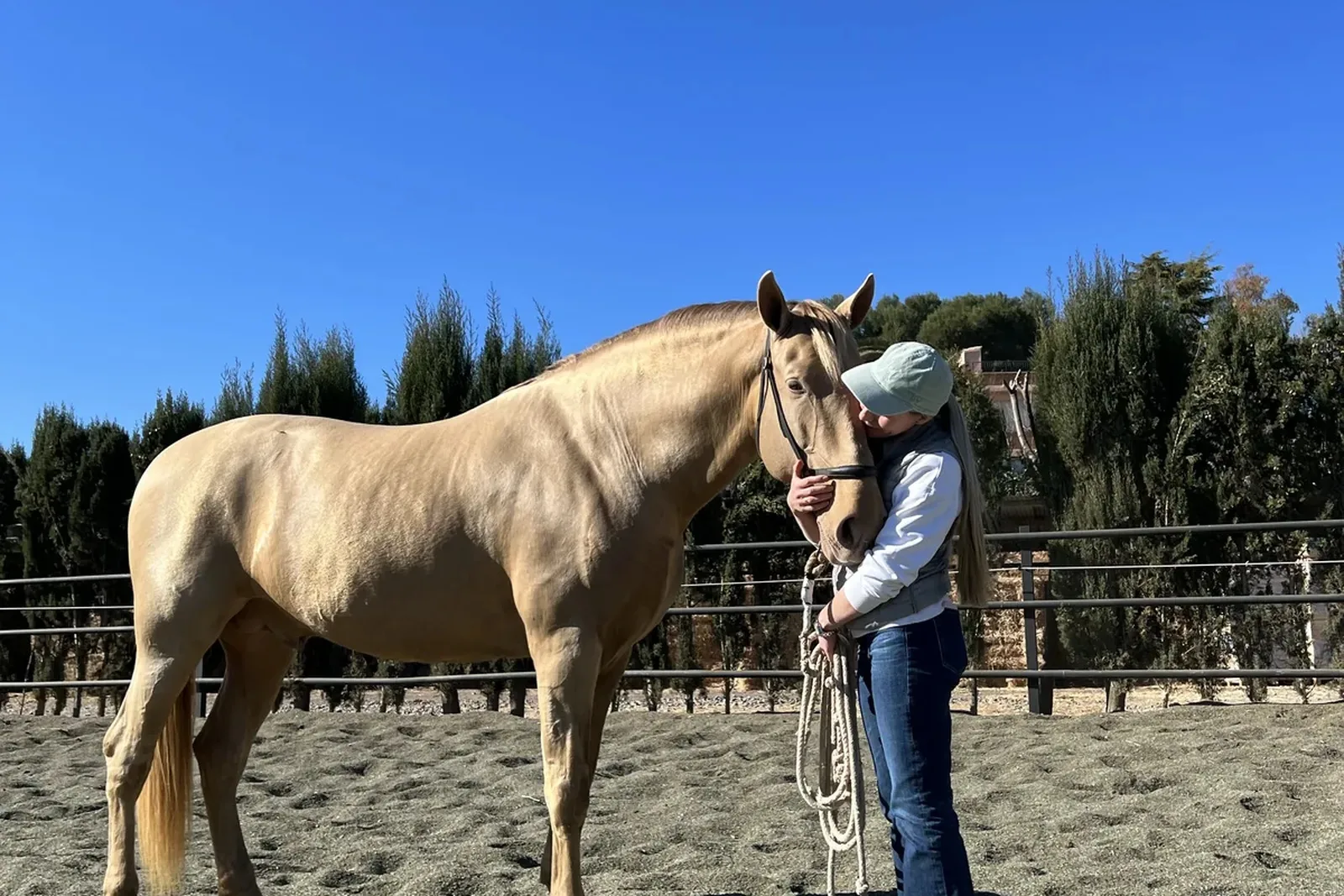
Temperament is the one thing you cannot radiograph. It is also the reason horses are resold more often than any unsoundness.
Below: what is visible in a single viewing, what is not visible in principle, and how to narrow the uncertainty to something you can live with.
Temperament and character are not the same thing
Temperament is innate reactivity. How quickly a horse winds up, how hard it reacts to something new, how long it takes to come back down. That is bred in and it changes very little.
Character is what people made of that temperament. Trust in the hand, an opinion about the saddle, the habit of standing still to be mounted, willingness to go forward off the leg.
The seller says "quiet horse" and means temperament. You are buying character. Those are two separate assessments and they do not always agree.
What an hour shows you
More than people think, provided you look at something other than the ridden work.
How the horse behaves in the box when you appear. Comes over, turns away, pins its ears over the feed bucket. An opinion about humans is formed here, not in the arena.
How it is caught and led out. A horse you have to chase around a paddock has already told you a good deal.
Reaction to grooming and tacking up. Ears back at the girth is more often back pain or a badly fitting saddle than a bad attitude, but you will have to find out which.
Whether it stands to be mounted. A correctly worked horse stands while the rider gets on.
What happens with something unfamiliar. Ask for the horse to be led past something it does not see every day: a tarp, an umbrella, a puddle. Do not watch the spook — everything spooks. Watch how many seconds it takes to come back to work. Why horses spook at all is in why horses spook.
How it answers a rider's mistake. Ask the rider to be deliberately late with the hand. One horse asks the question again. Another goes defensive. What the ears, tail and eye are saying while that happens is in horse body language.
What an hour does not show
An honest list of what a viewing will not tell you:
- behaviour in a new barn for the first two weeks after the move;
- behaviour without sedation, if sedation was used;
- reaction to different feed, different footing, a different climate;
- how the horse goes for a rider of your level rather than a professional;
- what happens when it stands for a month with no work;
- how it loads, if you did not watch it load.
Half of all "suddenly ruined" horses simply changed hands and conditions. That is not the seller lying. That is the limit of the method.
Temperament is heritable, but a pedigree will not predict it
Temperament does have a heritable component; behavioural studies within breeds show it. The coefficient is not high enough to make a prediction about one individual foal.
A pedigree tells you about type, height, movement and, to a degree, aptitude for work. It does not tell you whether this horse will stand on the crossties.
What works instead of a prediction: see the parents in the flesh. Not photos, not a studbook line. The dam's manner in the paddock and the sire's manner in hand. A mare raises her foal for the first six months, and her way of carrying herself passes on by more than genetics.
I saw SOL PM II and CASIA PM on 3 May 2023, the same day I saw Godo PM. The sire was led in hand down a gravel track, the dam stood by a building. That told me more than a line in a pedigree did. How to read the pedigree itself is in how to read a horse pedigree.
Breed sets a range, not a character
Breed descriptions are useful as a frame and harmful as a promise.
| Type | What it usually means |
|---|---|
| Iberian (PRE, Lusitano) | people-oriented, quick to learn, sensitive to the hand |
| Sport-bred warmbloods | workmanlike, need consistent riding |
| Arabians | high sensitivity, a long memory for conflict |
| Stock horses (Quarter Horse, Paint) | low reactivity, tolerant of a busy rider |
| Draft and driving types | slow response, high threshold before excitement |
The spread inside any one of those rows is wider than the gap between rows. Breed shifts the odds. It does not settle the question.
Questions for the seller
Five questions whose answers tell you more than the advertisement does.
One: how many owners has it had, and why is it for sale now. A fourth owner in three years is a diagnosis.
Two: what does this horse do when it does not want to do something. A good answer is specific: rears, backs up, pins its ears. "She does everything" is not an answer.
Three: how does it load. And ask to see it. Loading is the most honest test of trust in a person there is.
Four: how many days a week is it worked, and by whom. A horse in daily work with a professional and the same horse after three months in a field are two different animals.
Five: may I come back a second time, unannounced. A refusal closes the subject.
What changes a character once it is yours
Three things ruin a horse faster than any genetics: pain, boredom and inconsistency.
Pain means back, teeth, feet, saddle. It is the first thing to check on a horse that has "suddenly turned nasty". Teeth have their own article, horse teeth.
Boredom means twenty-three hours in a stall with no movement and no neighbours.
Inconsistency means shoulder-barging was allowed yesterday and is not allowed today.
How I look at a horse
I am not a trainer and not a professional rider. I look at a horse the way an owner does, because an owner is the one who lives with it afterwards: two visits, different times of day, loading every time, and something unfamiliar in hand every time.
After that the veterinary exam decides, not the impression — what a pre-purchase exam covers. Where to look for a horse at all is in where to buy a horse. If you want somebody in Spain to go and look for you and say it straight, the terms are here.