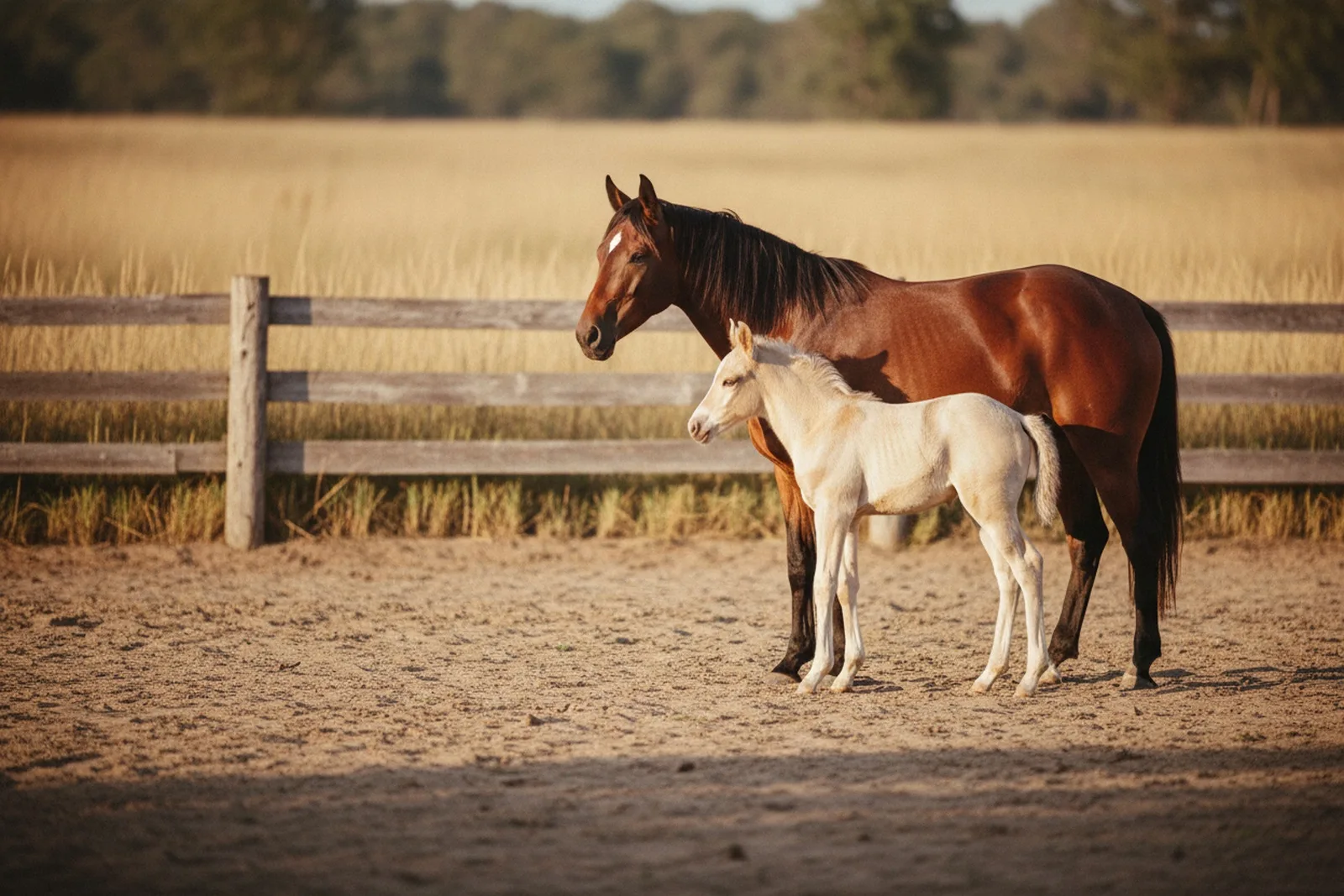
Stallion semen: fresh, chilled or frozen
How fresh, chilled and frozen stallion semen differ, conception rates per cycle, timing the insemination, studbook rules on AI, and what to ask the owner.
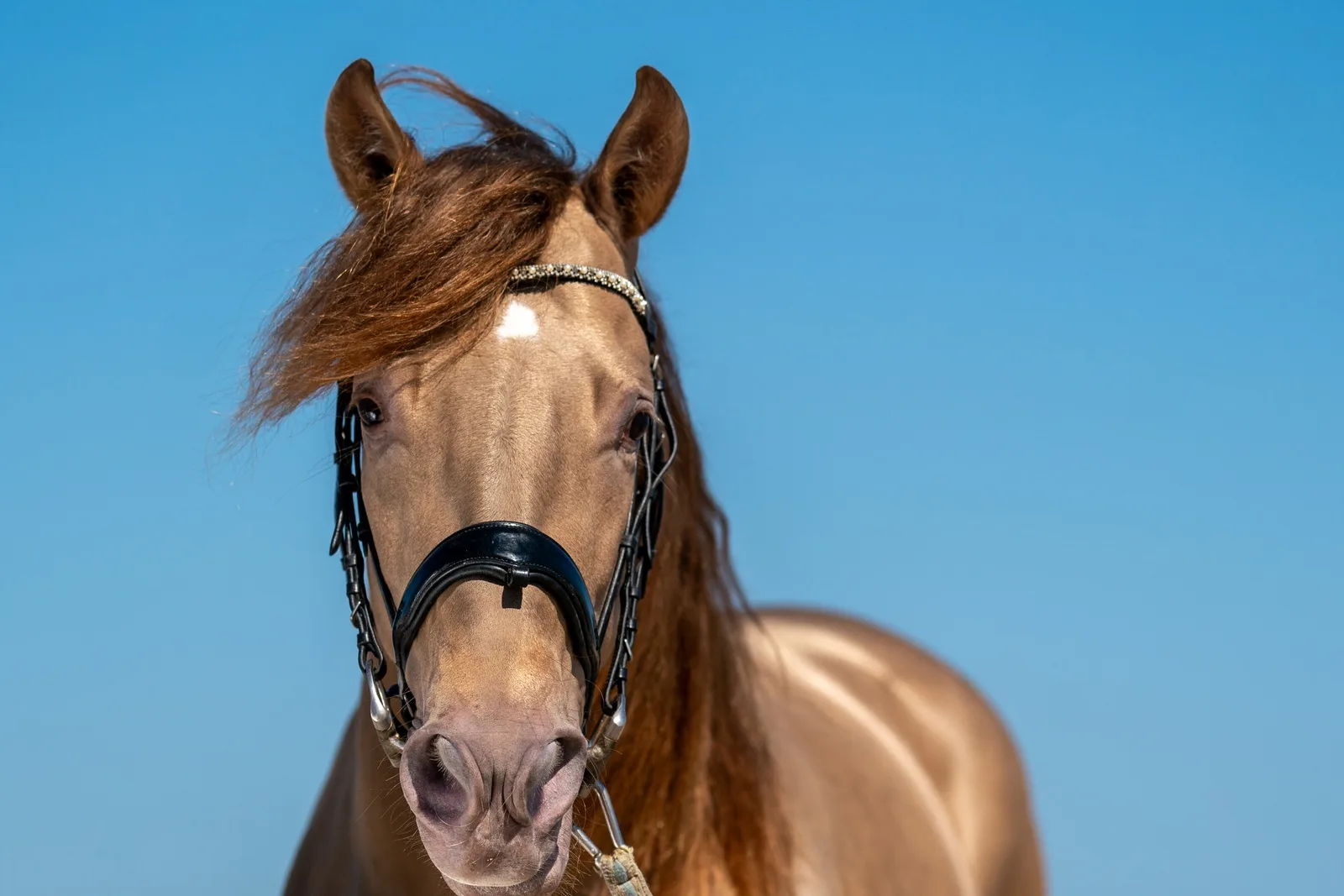
Artificial insemination has replaced live cover across most of European breeding. The reasons are plain: the stallion takes no risk, the mare takes no risk, and geography stops mattering.
Here is how the format of the semen gets chosen, and what it changes.
Three formats
Fresh semen. Used within a few hours of collection. The mare has to be standing at the same stud or close to it.
Chilled semen. Extended, cooled to +4 °C, viable for 24 to 48 hours. Sent by courier in an insulated shipper. Working radius: anywhere in Europe overnight.
Frozen semen. In liquid nitrogen at −196 °C. Stores for years, travels anywhere, including across an ocean, and outlives the stallion.
What separates them in practice
| Fresh | Chilled | Frozen | |
|---|---|---|---|
| Shelf life | hours | 24–48 h | years |
| Range | one yard | Europe | worldwide |
| Conception per cycle | 60–70 % | 50–60 % | 35–50 % |
| Timing precision needed | moderate | high | very high |
| Shipping cost | none | moderate | high |
The number that matters here is not the conception rate. It is the timing. Frozen semen survives 6 to 12 hours inside the mare against 24 to 48 for chilled. That means ovulation has to be caught in a narrow window, which means scanning every 6 to 12 hours and a vet who is willing to come out twice a day.
The practical conclusion: frozen semen is cheaper to ship and more expensive to use. If your vet cannot attend twice daily, order chilled.
Studbook rules, which are not the same everywhere
This is the part that catches out buyers moving between breeds, and it is worth checking before you pay for a dose.
The Jockey Club prohibits artificial insemination outright. A Thoroughbred conceived by AI cannot be registered in the General Stud Book or the American Stud Book — live cover only, in person, no exceptions. The same holds for Thoroughbred registries in Europe and Australia.
ANCCE permits AI, including chilled and frozen semen, and registers the resulting foal in the LG PRE ANCCE studbook on the strength of the mandatory parentage DNA test. Frozen semen from a dead stallion is registrable. This is one of the practical advantages of the breed for anyone breeding at a distance.
Between those two poles sit everyone else. Most European warmblood studbooks — KWPN, Oldenburg, Hanoverian, SF — allow AI freely but require a valid breeding contract and a stallion approved for that book. The AQHA allows AI and transported semen, with rules on how many mares and on embryo transfer. Some smaller registries cap the number of foals per stallion per year.
Read your own studbook's breeding rules before ordering, not after the mare is in foal.
Working out the cycle
The mare's breeding season runs March to September, peaking May to July. The cycle is 21 days, oestrus lasts 5 to 7 days, and ovulation occurs 24 to 48 hours before it ends.
The routine for chilled semen:
- The vet starts scanning on day three or four of oestrus.
- When the follicle reaches 35 mm, the semen is ordered.
- It arrives the following day, and the mare is inseminated once.
- At 14 to 16 days, a pregnancy scan, always with a twin check.
Frozen semen follows the same sequence, with scans every 6 hours at the end, and insemination within 6 hours either side of ovulation.
What to ask the stallion owner
Six questions that close the subject.
One: the semen evaluation. Concentration, motility, morphology. Not "excellent quality" — numbers, with the date they were taken.
Two: genetic testing. For PRE, the parentage DNA test is compulsory. Beyond that, colour tests and any hereditary disease panel relevant to the line.
Three: results from previous seasons. How many mares covered, how many foaled. If the stallion is young and there is no record, they should say so.
Four: how the logistics actually work. Who ships, which courier, at whose cost, and what happens if the dose arrives dead.
Five: what the fee covers. One dose or the season, whether a second attempt is included, whether there is a live foal guarantee, and when the fee is returnable.
Six: paperwork for the foal. Who issues the breeding certificate, what the studbook needs from you, and by when.
I will answer for my own stallion in the same terms. Godo PM was born in 2022. He has no offspring and no conception statistics. There is a dated semen evaluation, confirmed genetics and a pedigree published in full. Anyone offering you statistics on a stallion of that age is inventing them.
About the double pearl
Godo PM is homozygous for pearl: both copies. Exactly one thing follows from that, and it does not depend on anyone's opinion. Every foal he sires inherits a pearl allele.
How that pearl shows depends on the mare. If she is not a carrier, all the foals will be carriers and look conventional. If she is a carrier, half will be double pearl.
Separately: putting a pearl stallion under a grey mare makes no economic sense. The foal inherits the pearl and goes white by ten anyway. The gene travels on down the line, but you will never see it.
You can run your own mare through the grid on the breeding page. What the pearl gene is and how it differs from cream, I have covered separately.