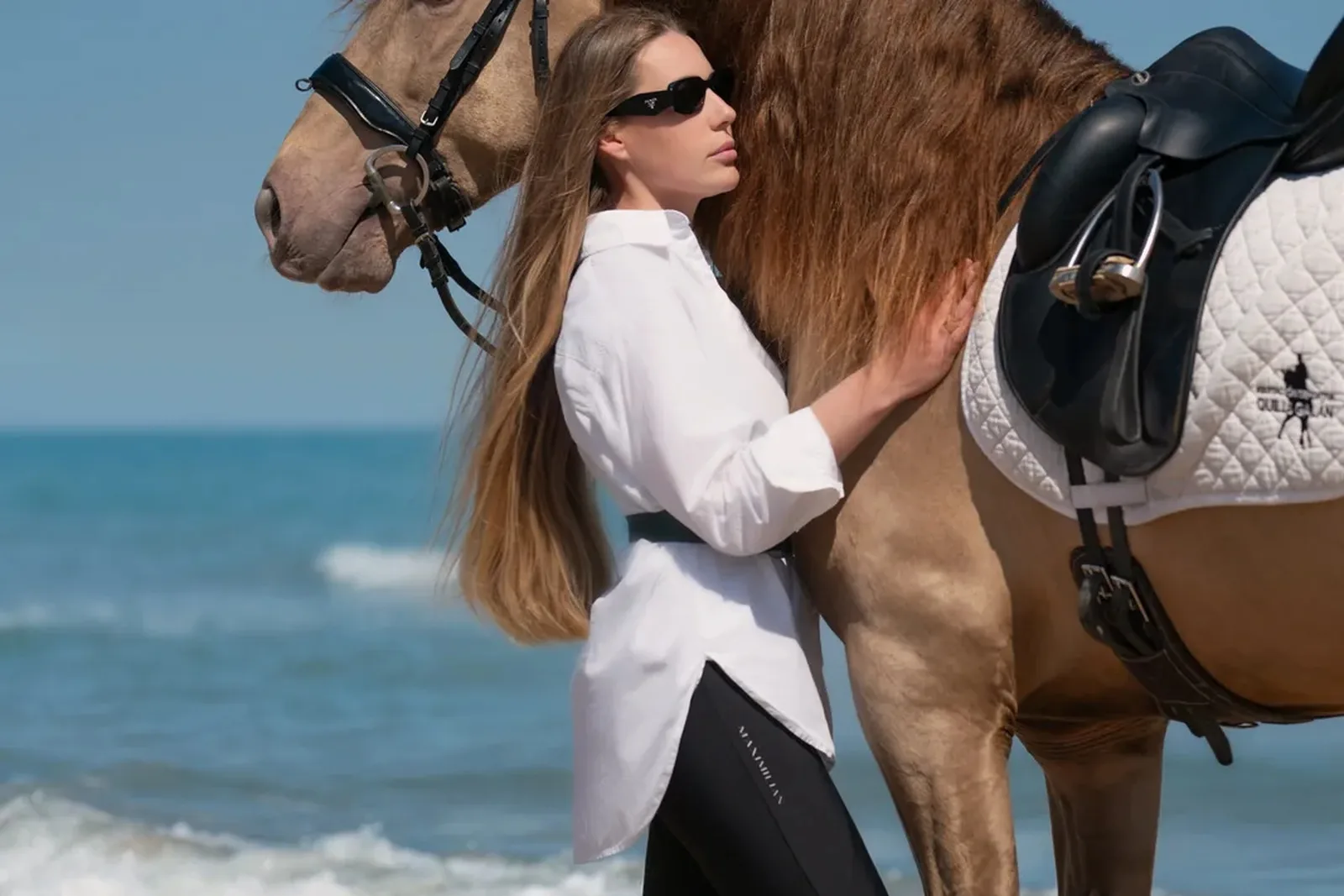
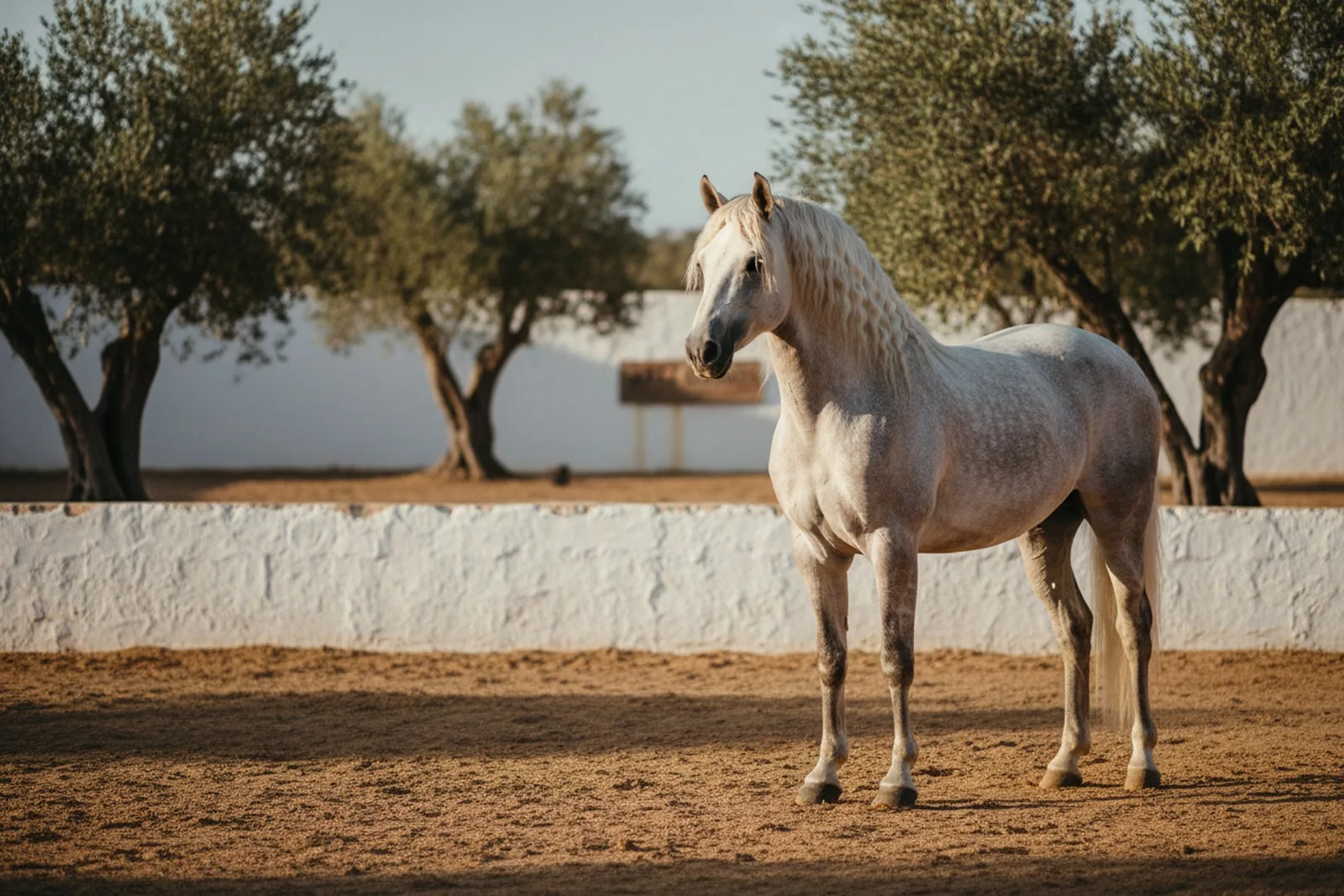
"Double pearl: the colour mistaken for cremello"
What the pearl gene is, how double pearl differs from a double cream dilute and from palomino, and what it passes on to the foal.
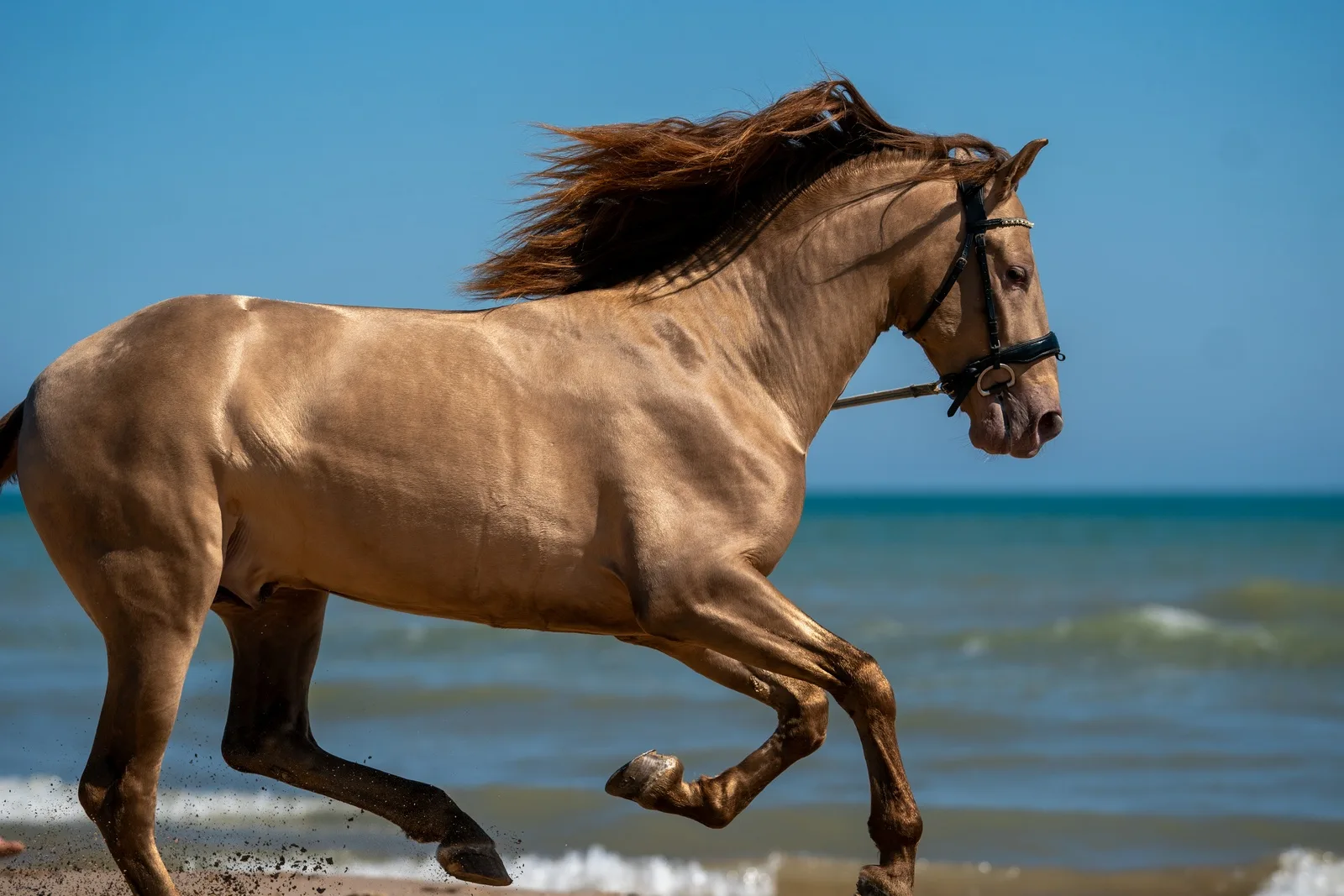
My stallion is registered in LG PRE ANCCE as bay double-pearl — double pearl on a bay base. In three years I have been told three times that I own a palomino, twice that he is a cremello, and once that he is "a cremello that went dark". None of those words is right.
I will take it in order, because for a semen purchase this is not a matter of taste.
What pearl is
Pearl is a dilution gene of the Iberian and American breeds. It sits at the same place in the genome as cream and behaves differently.
One copy of pearl is close to invisible. A carrier looks like an ordinary chestnut or bay. Sometimes a shade lighter, sometimes nothing. An experienced eye may suspect it. Only a test confirms it.
Two copies change the horse completely. The body goes golden with a metallic sheen to it, the skin lightens, the eyes turn amber or greenish.
That is why pearl is called a hidden gene. It can run down a line for generations showing nothing, and surface without warning when two carriers meet.
How it differs from a double cream
The colour English speakers call cremello, perlino or smoky cream is two copies of cream. The difference from double pearl is visible without a test.
| Double cream | Double pearl | |
|---|---|---|
| Body | cream, close to white | golden, with a sheen |
| Skin | pink | pale, but not pink |
| Eyes | blue | amber or greenish |
| Breeds | many | Iberian, Quarter Horses |
The blue eye is the fastest marker there is. Blue eyes mean cream, not pearl. The three double cream colours are set out in cremello, perlino and smoky cream.
How it differs from palomino
Palomino is one copy of cream on a chestnut base. Golden body, white mane. A double pearl on a chestnut base does genuinely look similar.
The difference shows up in the offspring, and it is fundamental.
A palomino is heterozygous. He carries one cream and one ordinary copy. Half his foals get the cream, half get nothing.
A double pearl is homozygous. Both his copies are pearl, there is no third option. Every foal he gets will carry pearl — all of them, not half.
That is the only thing double pearl guarantees. Everything after that depends on the mare: if she is not a carrier, every foal will be a carrier and look ordinary. If she is a carrier, half will be double pearls and half carriers.
What double pearl does not guarantee
Here I will be blunt, because advertisements stay quiet about it.
It does not guarantee the foal's colour. All of them get pearl, but how it shows depends on the mare's base. A bay base gives one shade, chestnut another. The bases are laid out in dilute coat colours.
It does not work against grey. If the mare is grey, the foal inherits pearl and still turns white by ten. The pearl stays under the white and carries on down the line, but you will not see it. Under a grey mare a pearl stallion makes no economic sense.
It does not replace conformation and movement. Colour sells first and works last.
Where pearl in PRE comes from
The pearl gene is rare in PRE and held in a few bloodlines. In Godo PM it came from both sides: his sire SOL PM II is a double pearl, his dam CASIA PM is registered chestnut and carries one copy of pearl. Double pearl in Godo was the breeder's calculation, not an accident.
The stud he was bred at is Yeguada Paco Martí in L'Alcora, province of Castellón. They work deliberately with the dilute coat colours inside the breed.
How to check you are not being sold a story
Three questions to a seller that close the subject.
First: show me the genetic test result. Not the colour description in the passport, the laboratory report with the genotype on it. Pearl is called unambiguously by the test.
Second: what colour are the eyes. Blue means cream. A seller who calls a blue-eyed horse a double pearl either does not know or is counting on you not knowing.
Third: are there grey ancestors in the pedigree. Grey is dominant, and if it sits in the near generations the horse will turn white regardless of pearl.
I have published the pedigree of Godo PM in full — four generations, thirty-one ancestors, with the ANCCE indices. It is here, and there is nothing to take on trust: all of it sits in the open studbook.