Horse coat colours: the complete list with names
Every horse coat colour named: the three bases, the dilutes, grey, pinto and appaloosa, and how to tell each one from the colour it gets mistaken for.
Horses look as though they come in hundreds of colours. The genes that make them number about a dozen. Here they are in order: the three bases first, then everything that lies on top of them.
The three base colours
It all starts with two pigments, black and red. How they sit relative to each other gives three bases.
Black. Black hair over the whole body, black mane and tail. A true black does not fade; a horse gone brown in the sun is more often a dark bay.
Bay. Brown body, with black mane, tail and legs below the hock and the knee. The most common colour in the world. Shades run from light bay to dark bay, almost to black.
Chestnut. Red hair everywhere, mane and tail included. There is no black pigment at all, so a chestnut never has black legs. Shades run from light chestnut to dark liver.
Everything else is one of those three with another gene laid over it.
The dilutes
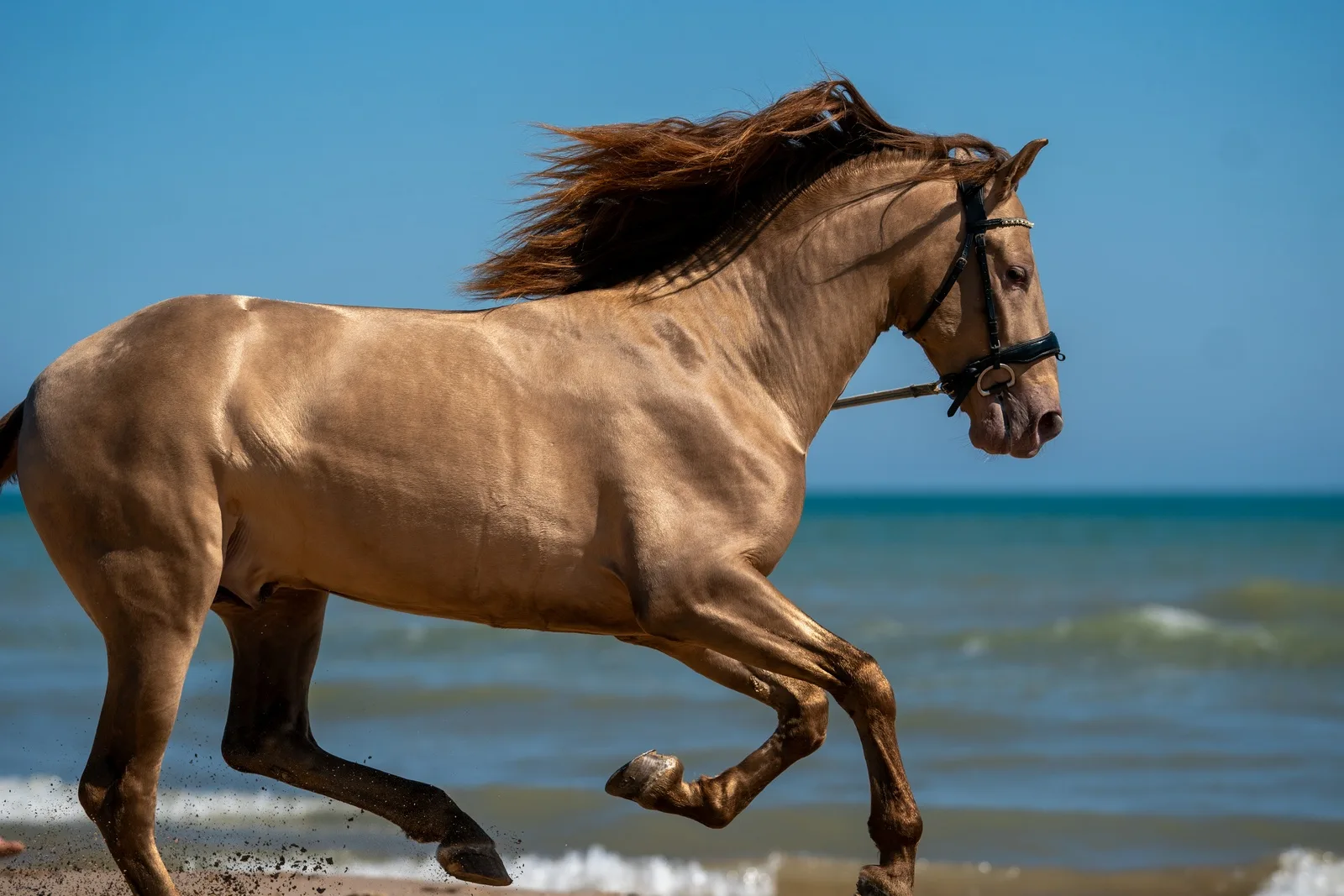
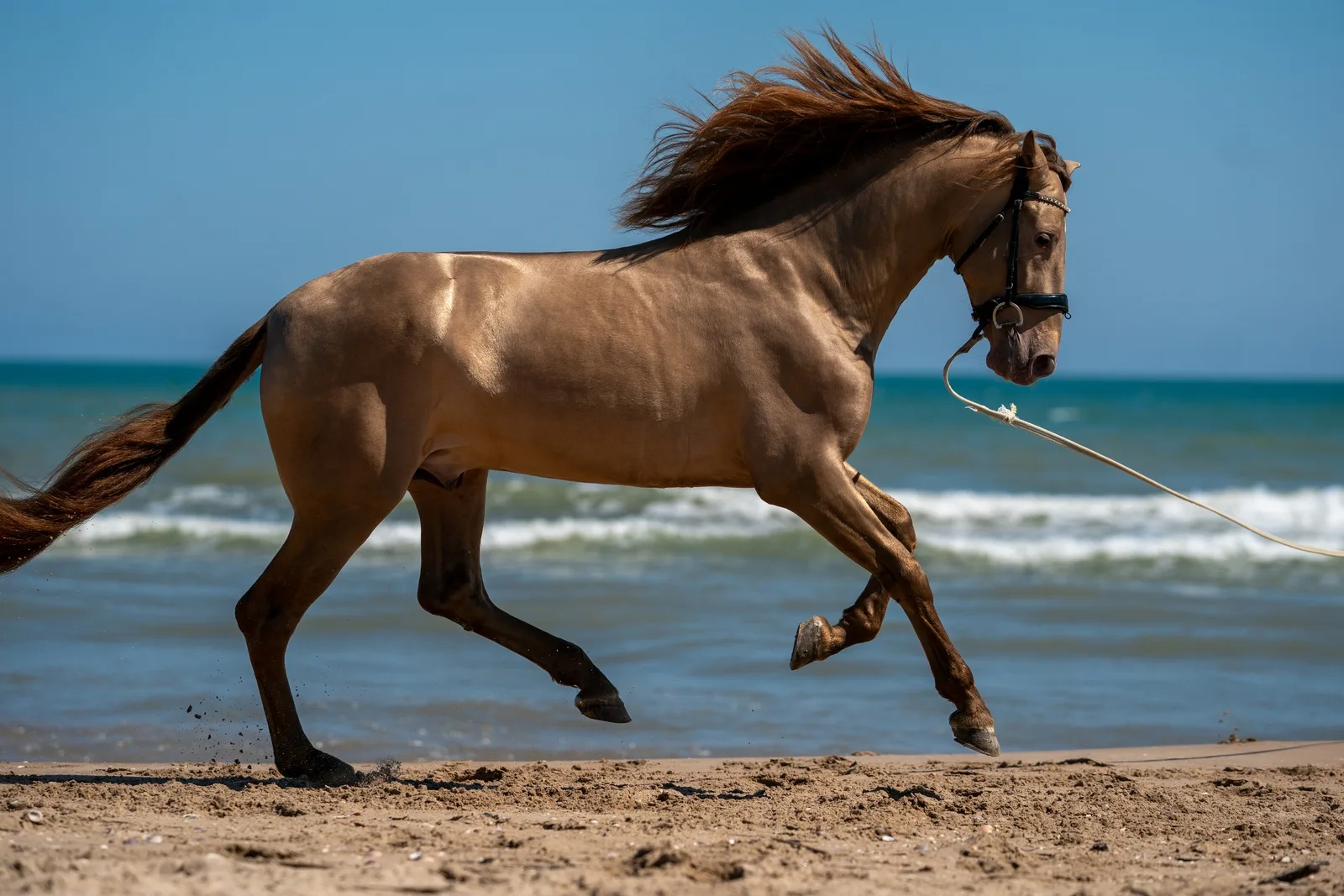
Cream. One copy on chestnut gives palomino — golden body, white mane. On bay it gives buckskin — sandy body, black mane and legs. On black it gives smoky black, which the eye can barely separate from plain black.
Two copies of cream give the double-cream dilutes: a body the colour of clotted cream, pink skin, blue eyes. Depending on the base underneath they are called cremello, perlino or smoky cream.
Pearl. Sits at the same locus as cream. One copy shows almost nothing; two give a golden body with light skin and amber eyes. This is not double cream, which has blue eyes and pink skin. Pearl has an article of its own, and so do the dilutes as a whole.
Champagne. Lightens the body and gives mottled skin around the eyes and muzzle. Eyes are blue at birth, then darken to amber. It does not occur in the Iberian breeds.
Silver. Lightens black pigment only: on a black base it gives a chocolate body with a flaxen mane. On chestnut it shows nothing.
Dun. Lightens the body but leaves a dark dorsal stripe and often zebra bars on the legs. On bay it gives bay dun, on black grullo, on chestnut red dun.
Grey
Separate, because it is built unlike anything else.
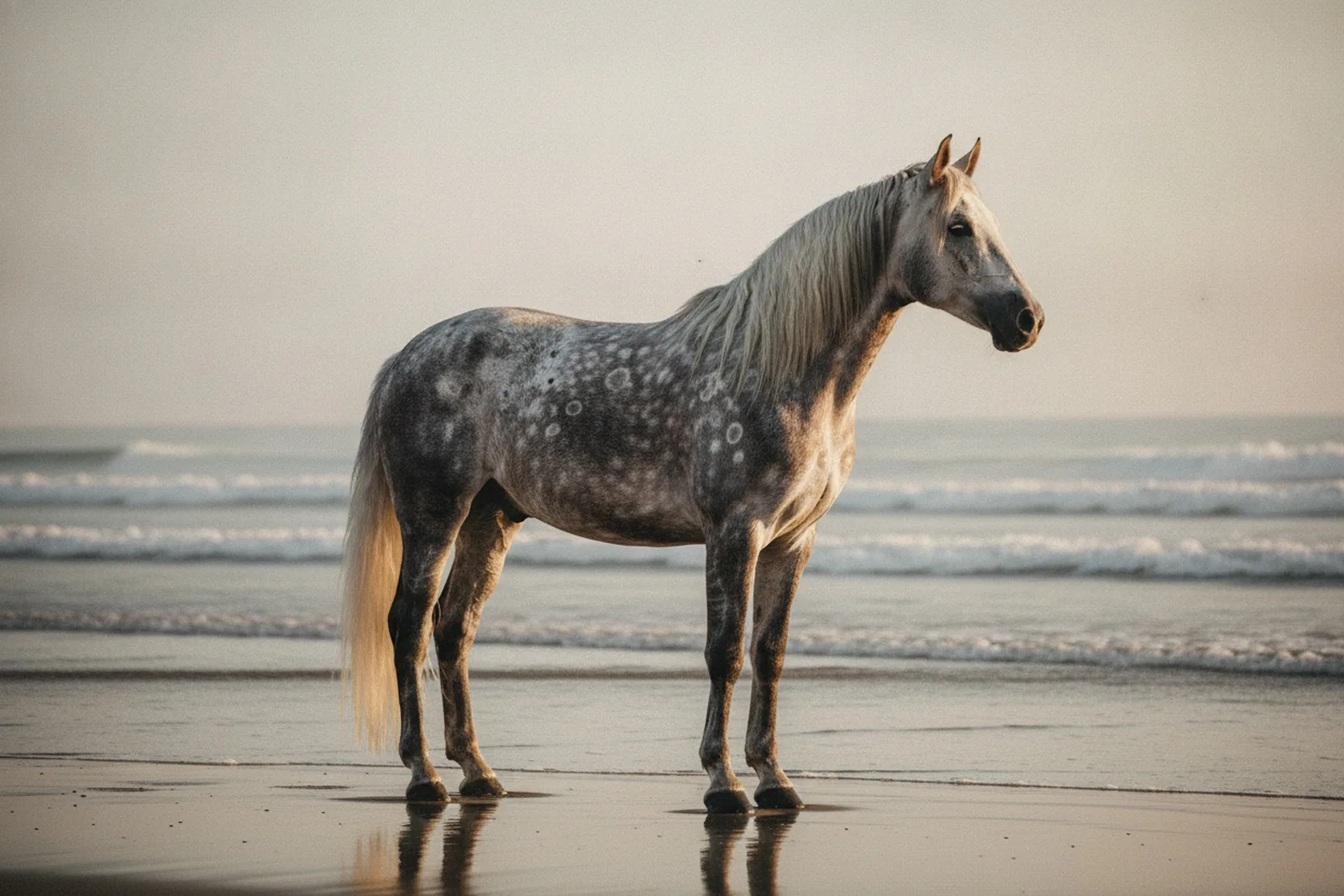
The grey gene is dominant and progressive. The horse is born some other colour and then greys out year after year until it is nearly white — through dappled grey and then flea-bitten.
Grey does not replace the genotype, it paints over it. A horse gone white can be carrying double pearl under the white hair and pass it on.
Pinto, appaloosa and roan
Three ways of adding white over any base.
Pinto. Large white patches with clean edges. The names describe the pattern: tobiano, overo, sabino, splash. Purebred PRE carry none of them.
Appaloosa. Leopard complex spotting: blanket, leopard, snowflake, mottled skin and striped hooves.
Roan. White hair mixed evenly through the body coat while head and legs stay dark. It does not lighten with age, and that is what separates it from grey.
Flaxen. Neither a dilute nor a pattern: a chestnut body with a light, almost white mane and tail. A separate gene, unrelated to cream.
What the colours are called in Spanish
Worth knowing before you open a set of PRE papers.
| English | Spanish |
|---|---|
| Black | negro |
| Bay | castaño |
| Chestnut | alazán |
| Grey | tordo |
| Palomino | palomino |
| Buckskin | bayo |
| Cremello, perlino | cremello / perlino |
The mix-ups that happen most
Dark bay taken for black. Look at the muzzle and the flank: a bay has red there.
Palomino taken for double pearl. A photograph will not separate them, a test will. The difference comes out in the foals.
Double cream taken for double pearl. Blue eyes mean cream. Amber eyes mean pearl.
Grey taken for roan. Grey whitens over the years, roan does not.
Cremello taken for white. True white — dominant white — is the rarest thing on this list: pink skin and dark eyes.
Why a buyer needs this
Colour is the first thing you see and the first thing people pay over the odds for. The seller writes "palomino" because that is what it looks like, and the papers say something else. For riding it changes nothing. For breeding it decides everything.
If you are planning a foal, do the arithmetic on the genotypes of both parents, not on a photograph. The grid that does it is on the breeding page.