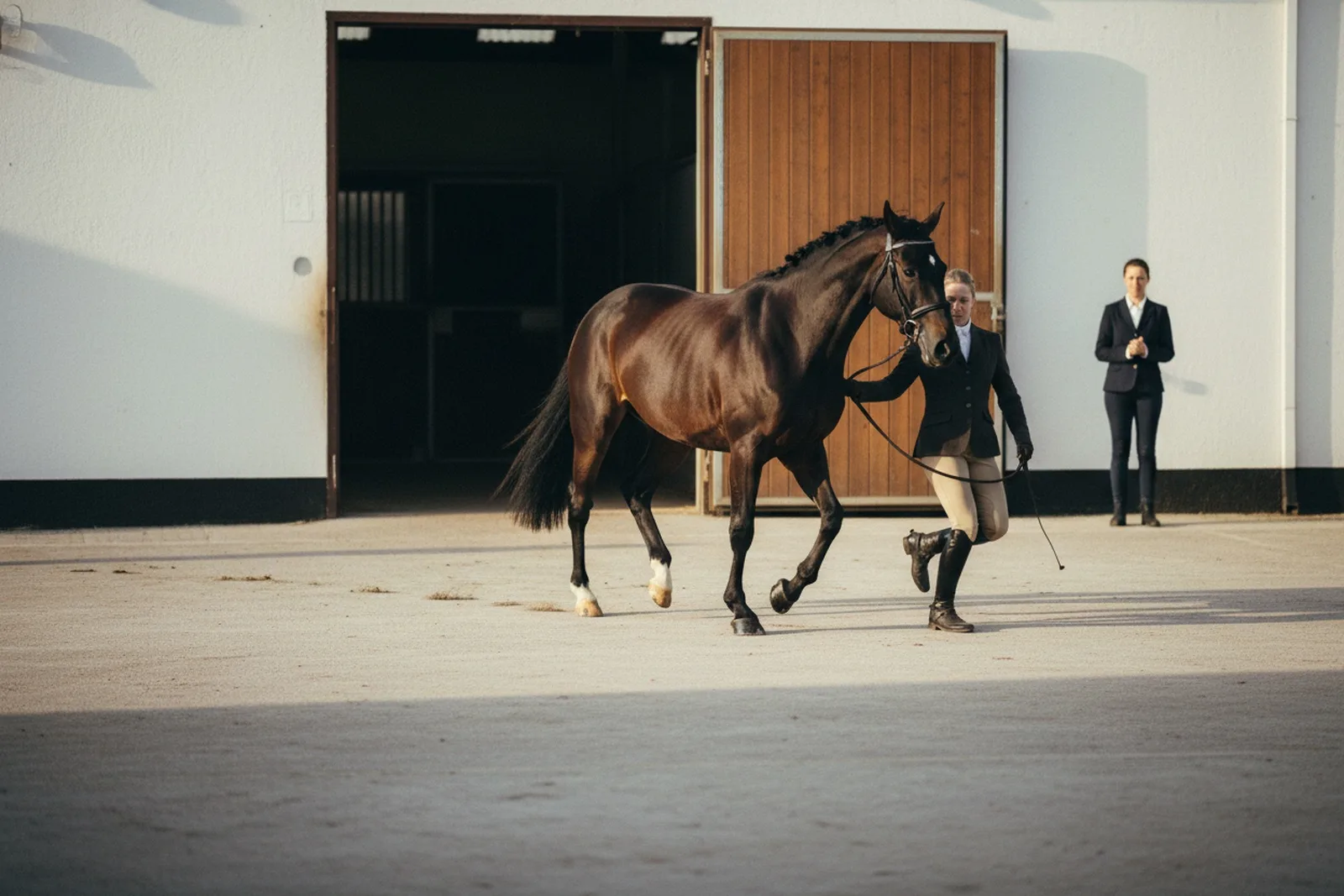
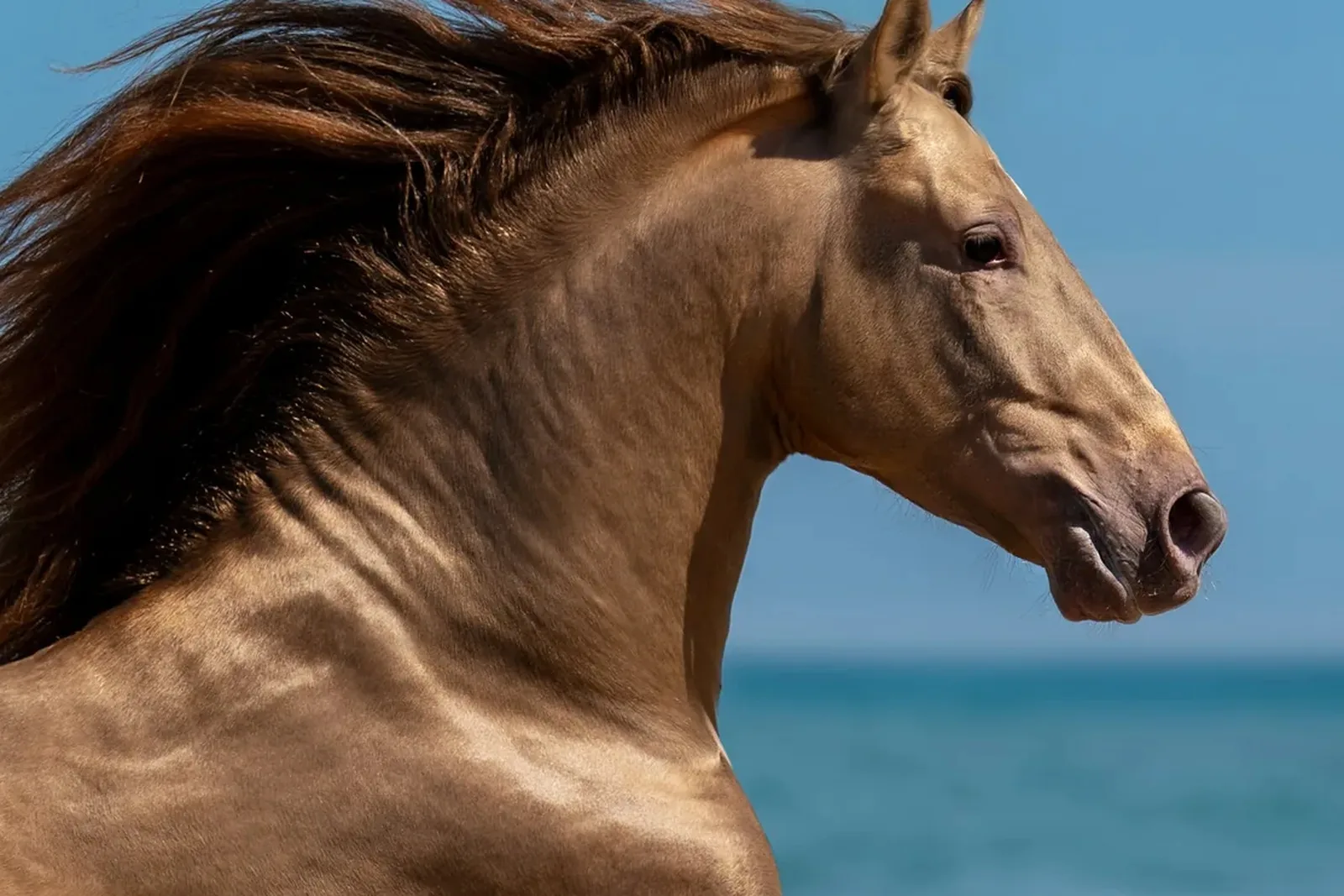
"Papers of a Spanish horse: LG PRE ANCCE, passport, chip"
What papers a PRE must have, what UELN and LG PRE ANCCE are, how to check a horse in the studbook, and what moving one inside the EU or into the US takes.

Papers are what is left of a horse once it stops looking the way it did in the photograph. They are what breed, pedigree and ownership rest on. Without them a horse is worth whatever somebody will hand over on the day.
I will go through the Spanish file, because that is the one people get wrong.
LG PRE ANCCE — the only studbook
Pura Raza Española is kept in one stud book: the Libro Genealógico de la Pura Raza Española, held by ANCCE in Seville and recognised by the Spanish Ministry of Agriculture.
Other registries of Spanish horses exist, in Spain and abroad. Outside that one book they count for nothing: for export, for registering offspring and for a sale, only LG PRE ANCCE is looked at. A horse papered with a North American Andalusian registry and never entered in the LG PRE is Spanish in type, not a PRE.
The practical consequence: if a horse is not in LG PRE ANCCE, it is not a PRE. A handsome certificate with a stud's stamp on it does not substitute.
UELN — the number everything is checked against
UELN stands for Universal Equine Life Number, a fifteen-digit number used across Europe. It is issued once for life and does not change on sale.
The structure is simple: the first three digits are the country, the next three the issuing organisation, then the individual number.
With the UELN the horse can be looked up in the open ANCCE database. It takes a minute and it is done before the deal, not after. My Godo PM has UELN
- Anyone can check it.
What a complete file looks like
The passport (Documento de Identificación Equina). The main document. In it: name, date of birth, coat colour, markings, the silhouette diagram, chip number, UELN, pedigree over several generations, vaccination records, and the declaration of whether the horse is intended for the food chain.
The certificate of origin. Confirms the entry in the stud book and the horse's standing inside it.
The microchip. Implanted in the left side of the neck. The number has to match the passport. It is verified with a scanner on the live horse.
Genetic test results, where they exist. Parentage, coat colour, hereditary disease. In PRE a parentage test is compulsory to register offspring.
Veterinary records. Influenza and tetanus vaccination, equine infectious anaemia testing, and for export the recent ones.
Status inside the breed
Inside LG PRE ANCCE a horse can carry additional qualifications, and they move the price.
Calificado — the horse has passed conformation assessment and is approved for breeding.
Recomendado — recommended sire or dam, the next step up.
Élite — the top breeding qualification, awarded on the strength of offspring.
Cartujano is not one of these. The Carthusian line is a fact of the pedigree and has no line of its own in the passport — what the word does and does not mean is in the Cartujano line.
Separately, ANCCE publishes breeding indices for conformation, movement and functionality. The breed average is 100. Every index carries a reliability figure: one calculated on three offspring and one calculated on three hundred read very differently.
Plainly about my own horse: Godo PM has no breeding qualification yet and no offspring. The indices belong to his parents. That is not a reason to pass on his semen, but it is something a buyer should know before, not after.
Moving the horse inside the EU
Inside the Union the passport travels with the horse and stays its identity document for life. Nothing is reissued at the border.
- The health certificate goes through TRACES. For a permanent move to another member state the vet in Spain issues it in the TRACES system, and it travels with the transport.
- Ownership is re-registered afterwards: ANCCE, plus your own national body — the FN in Germany, IFCE in France.
- The chip and the passport must agree before the lorry is loaded, not on arrival.
- Do not lose the Spanish passport. A replacement out of ANCCE from abroad is a matter of months.
Importing into the United States
This is where deals fall over. Check the current APHIS requirements with your vet before you commit money.
- EIA (Coggins) negative and a health certificate endorsed by the Spanish government veterinarian, dated inside the window APHIS allows.
- Piroplasmosis. Spain is endemic for it, and a fair share of Spanish horses test positive on the cELISA. A positive horse is not admitted for permanent import. Test the horse before you agree a price, not after.
- CEM quarantine. Spain is not on the CEM-free list, so mares and stallions over 731 days go through testing and quarantine at an approved facility, on top of the port-of-entry quarantine. For a stallion that is weeks and a bill in the thousands of dollars.
- Semen instead of the horse. Often the whole answer: frozen semen crosses under its own certificate, and no CEM quarantine touches the stallion standing in Spain.
How to check a horse in five minutes
The order that closes nine problems out of ten.
First: ask for a scan of the passport — the spread with the UELN and the pedigree. A seller who will not show the document before a deposit has already given you his answer.
Second: find the horse by UELN in the ANCCE database. Name, date of birth and parents match — good. Not found — we stop there.
Third: read the chip on the live horse. A scanner costs nothing and every vet has one.
Fourth: check who the owner is. The name in the passport and the name of the seller have to be the same, otherwise you need a power of attorney.
Fifth: look at the food chain declaration. A horse excluded from the food chain could be treated with a wider list of drugs, and that is usually a good sign.
What to read next
How to read a pedigree without drowning in names — reading a pedigree. What happens to the papers when the horse actually moves — importing a horse into the EU.