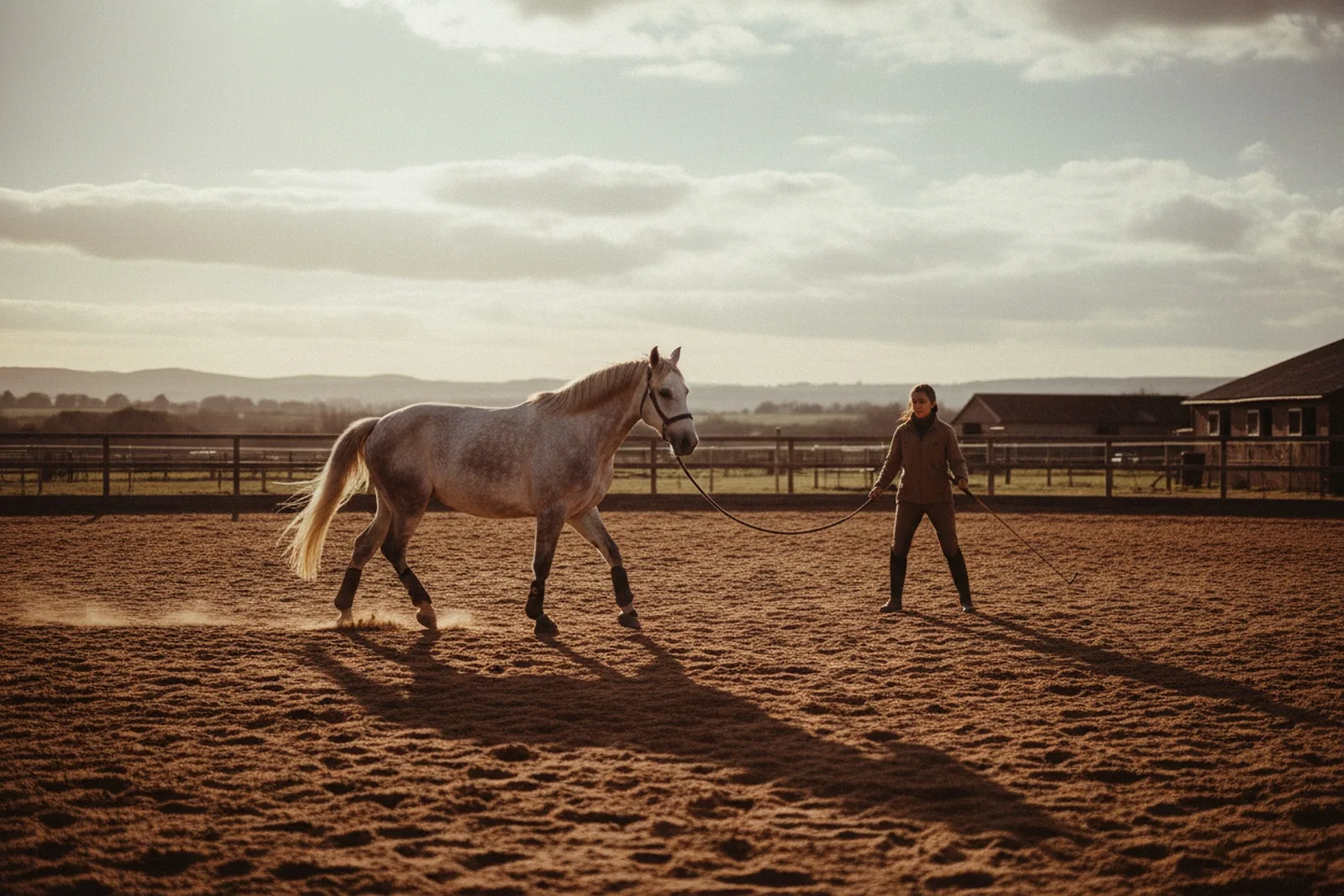
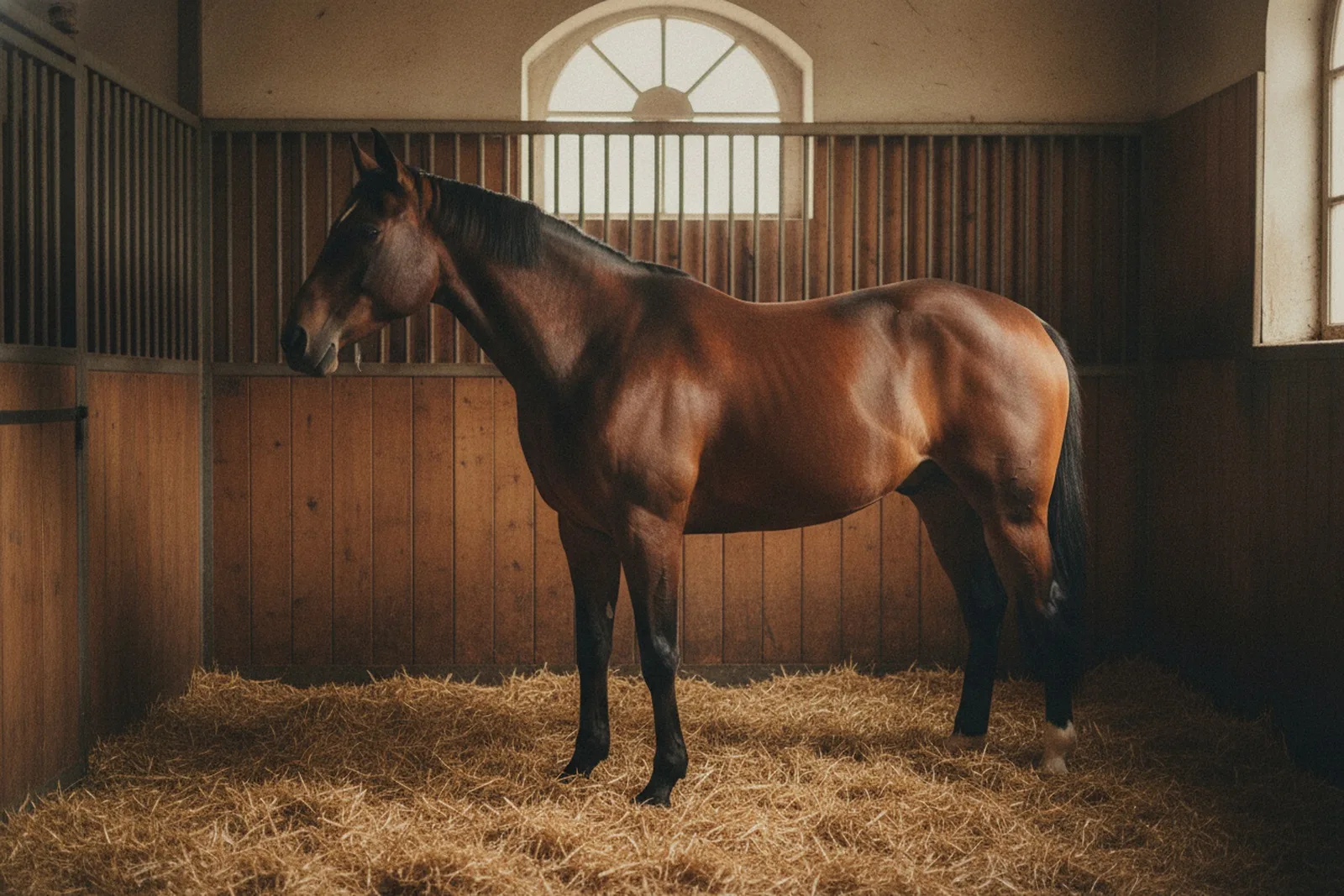
Lusitano vs PRE: how the two Iberian breeds differ
Selection, conformation, character, the APSL studbook, the Veiga and Andrade lines, prices in Portugal and what to check before you buy.
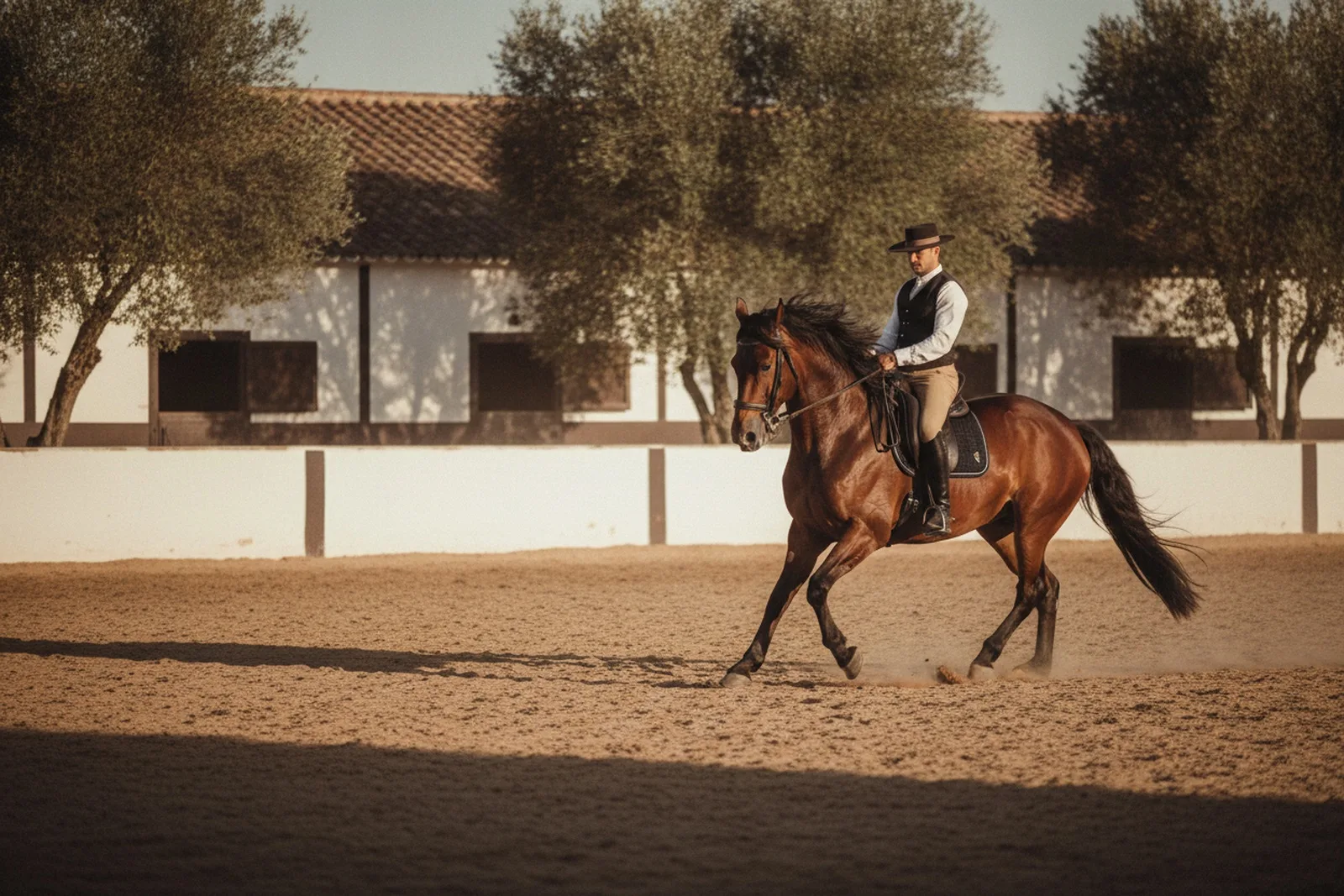
The Lusitano comes up every time somebody starts thinking about an Iberian horse. The question is almost always the same: is it the same thing as a PRE or not.
They are two breeds with one root. I live in Valencia, I keep a PRE stallion and I find horses in Spain, so I look at the Lusitano from the Spanish side of the border. Below is what actually separates the two, not what gets copied from one website to the next.
One horse, two countries
Until the twentieth century the Iberian horse was shared. The Spanish and Portuguese lines ran in parallel, blood crossed the border freely, and the books were split only in modern times: the Portuguese opened their own studbook, the Spanish opened theirs.
The horses did not diverge, the selection did. Each book has run its own programme for forty-odd years since, and the difference has accumulated.
The PRE was bred for the arena and the parade. High neck set, collected movement, calm work in front of a crowd, presence.
The Lusitano was bred for the bullring. Mounted bullfighting — rejoneio — is alive in Portugal, and it needs a different horse: quick to turn, reactive, willing to go forward at a moving object and not give ground.
Everything else follows from that, including character and price.
The studbook: APSL, not ANCCE
This is where people get it wrong most often.
The Lusitano is registered with APSL, the Portuguese association of breeders of the Puro Sangue Lusitano. The PRE has a different studbook: LG PRE ANCCE in Seville.
Two separate books, and no horse can be entered in both. A seller who calls a horse "Spanish-Portuguese" or "an Andalusian with Portuguese blood" is selling a cross. A cross can be a very good horse, but it is neither a PRE nor a Lusitano, and you will not resell it as purebred.
Verification works the same way as on the Spanish side: passport, microchip, UELN, entry in the register. I have gone through the mechanics in Spanish horse papers — APSL is built along the same lines, only the book is different.
Conformation: what you see up close
Both breeds stand at about the same height, roughly 155 to 165 cm at the withers, 15.1 to 16.1 hands. In a photograph a non-specialist will not tell them apart, and that is normal.
The differences that show up in person:
| PRE | Lusitano | |
|---|---|---|
| Head profile | straight or slightly convex | convex more often and more marked |
| Neck | set high, showy | set lower, heavier at the base |
| Croup | rounded, tail set higher | more sloping, tail set lower |
| Overall type | parade | working, more compact |
| Coat colours | grey dominates | grey and bay, chestnut noticeably more common |
An honest caveat: the spread inside each breed is wider than the gap between the averages. There are parade-type Lusitanos and there are working-type PREs. Type is established from the papers, not from the head.
Lines within the breed
Lines mean more in the Lusitano than they do in the PRE, where the only line sold by name is the Carthusian. Here they are worth looking at before conformation.
Veiga. The line selected directly for the bullring. Dry, not large, exceptionally reactive. The brightest and the most demanding material in the breed.
Andrade. Bigger and quieter, closer to an all-round riding horse.
Alter Real. The state line of the Portuguese stud, bay, bred for high school work.
If a line gets named and you do not know what it means, that is already information about the seller. A Lusitano breeder will name the line himself and explain what it gives you.
Character: the difference from a PRE
Here I write what I see, working with both breeds side by side.
The Lusitano decides faster. The reaction is shorter than in a PRE. Where the Spaniard looks at you first, the Portuguese has already done it.
He is braver. The breed was selected not to give ground to something coming at it. In daily life that means less spooking and more forward.
He asks more of the rider. A PRE forgives an imprecise aid and waits. A Lusitano answers the imprecise aid, and answers it immediately.
He does not tolerate inconsistency — no more than a PRE does, except that the mistake costs more.
The practical conclusion. A Lusitano is not a first horse. As a second or third, under a rider with hands and a trainer, the material is outstanding. For somebody who sat on a horse for the first time last year it is too much horse.
What he is for
Working equitation. The home discipline of the breed, and the Lusitano is objectively stronger in it than anything else.
Dressage. The breed genuinely competes at the top, and Portuguese riders show it internationally. The PRE is represented in dressage too, but the Lusitano on average brings more energy to the collected work.
In-hand work and high school. Both Iberian breeds are at home here.
The bullring is the historical purpose. It has nothing to do with how we ride, but it explains the breed.
What not to expect. Show jumping at result level: the build is wrong, exactly as in the PRE. And a quiet weekend horse — that is a different temperament altogether.
Health
The Lusitano has no compulsory breed genetic test the way the Arabian has SCID or the Friesian has dwarfism: no lethal recessives with mass testing are described in the breed. What is actually worth looking at:
Melanoma in greys. The shared history of every breed with a lot of grey in it, the PRE included. A grey horse over ten gets checked for melanomas as a normal part of the pre-purchase exam.
Joints and feet on radiographs. Standard for any horse, no discount for breed.
The back under the saddle. A compact Iberian back has its own demands on saddle fit.
I am not a vet. I write this as an owner who has been through pre-purchase exams more than once.
What it costs
Prices in Portugal, at the breeder, transport not included. The ranges come from listings and from deals I know about; APSL publishes no official figures.
| What | Price |
|---|---|
| Foal under a year with APSL papers | €5,000–9,000 |
| Started young horse, 3 to 4 years | €12,000–25,000 |
| Horse with a result or a breeding grade | from €30,000 |
A Lusitano is on average dearer than a PRE of the same age and level. The population is smaller, the book is smaller, and the good lines are concentrated in a handful of studs.
On top of the price comes the usual list: the pre-purchase exam, the export paperwork, the transport. Lisbon to northern Europe is two or three days by road; into the US it is an import permit, a Coggins test and quarantine on arrival.
What I do in this field
Iberian breeds are what I work with. I find horses in Spain, look at them in person, film the movement, arrange the exam and handle the export paperwork. The Lusitano is the neighbouring border and the neighbouring studbook, and there I work through Portuguese breeders.
If you are choosing between the two, read the piece on the PRE first: the Spanish side is set out there in detail. After that the question is a simple one — do you want a horse that waits for your decision, or a horse that makes its own.