Buying a foal: what you can and cannot see
What age foals are sold at, what a yearling already shows and what it hides, why you look at the sire and dam, and what three years to saddle really costs.
A foal costs a fraction of a made horse. That is its only financial advantage: after that you spend three years paying board on an animal you cannot ride.
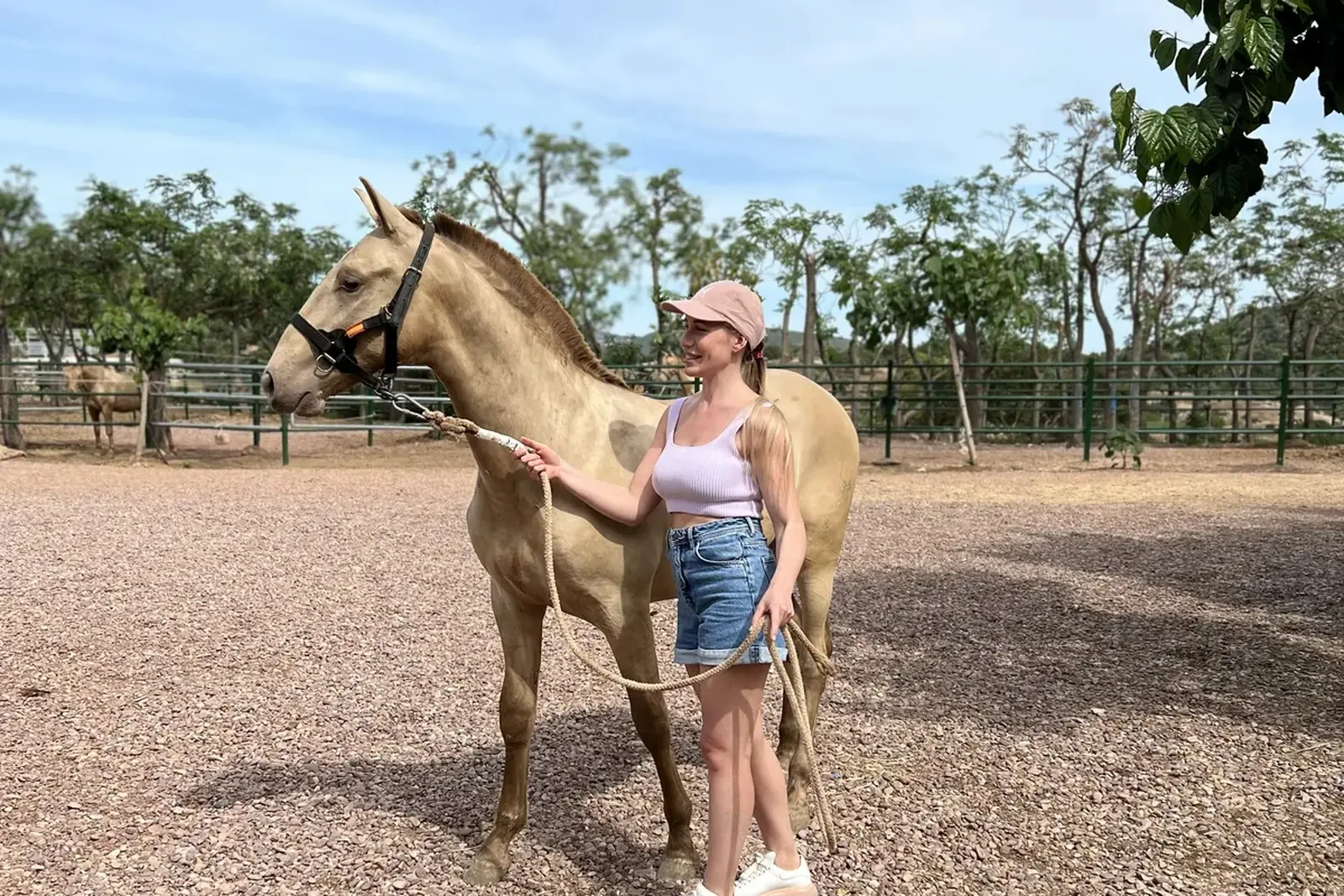
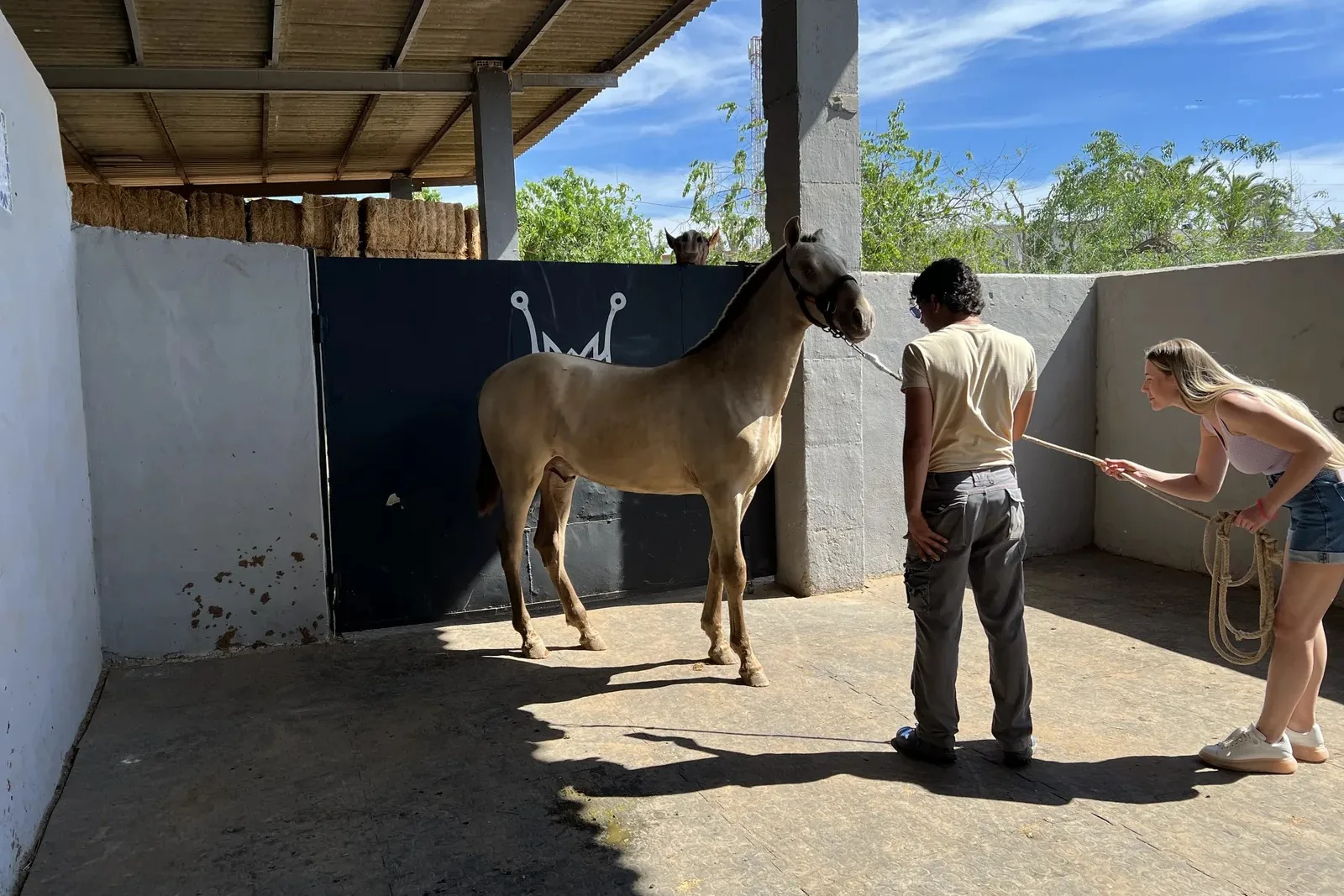
I bought Godo PM on 3 May 2023, at thirteen months, at Yeguada Paco Martí in L'Alcora. Below is what I looked at then and what I learned afterwards.
What age they are sold at
Before weaning, never. Weaning happens at five to seven months. A foal offered at three months is being taken off the mare for the sale, and it shows later.
| Age | What it means |
|---|---|
| 6–12 months | lowest price, highest chance of being wrong |
| 1–2 years | type, movement and the first outline of temperament are visible |
| 2.5–3 years | close to backing, price already noticeably up |
Thirteen months is roughly the middle. Conformation reads, the price has not moved yet.
What a foal shows you
Not much, but what there is matters.
Legs and stance. Viewed from in front and behind, on level hard ground. Toeing out, toeing in, a back-at-the-knee outline, a weak pastern. Some deviations straighten as the horse grows and some do not, and it is a vet who tells you which, not the seller.
Movement at liberty. The foal goes into a paddock and you watch the walk and the trot. Ground cover and a clean rhythm are visible at a year old, and they do not appear later if they are not there now.
Proportions. Leg length against body, length of neck, slope of shoulder, top line. Young stock grows unevenly and often stands croup-high, which is normal. A short neck and an upright shoulder stay forever.
Feet. Are they a matched pair, is there any sign of regular trimming. A yearling's foot already tells you how it has been looked after. More in horse hoof anatomy.
Reaction to people. Comes to you or leaves, lets you touch it, gives a foot. That is the stud talking, not the genes.
What a foal hides
The list is short and unpleasant.
- Mature height. A prediction from yearling measurements is out by several centimetres either way.
- Temperament under saddle. That arrives two years from now, with the work.
- Athletic ceiling. No yearling is a "promising jumper".
- The back. Until a horse carries weight, very little about its back is known.
- The final coat colour. Some colours darken or lighten until three or four.
Buying a foal is a bet, not a choice. You can narrow the odds. You cannot close them.
Look at the sire and the dam
That is the only way to see the future.
Grown parents show you what the foal does not have yet: height, type, bone, quality of movement, the way they handle a person.
On 3 May 2023 the stud showed me both. The sire, SOL PM II, a double pearl foaled in 2009 with 109 offspring, was led in hand along a gravel track. The dam, CASIA PM, foaled 2018 and registered as chestnut, stood by a white building. Twenty minutes passed between the two.
CASIA PM looked visibly lighter than an ordinary chestnut — exactly the way a chestnut mare carrying one pearl allele looks. It confirmed what the pedigree already said. How to read one is in how to read a horse pedigree; the colour itself is in double pearl.
If they will not show you the sire or the dam, that is your answer.
Papers
Without papers a foal is just an animal, and there is nothing to sell later.
What a Spanish PRE foal must have: entry in the LG PRE ANCCE studbook, a passport, a microchip, and a DNA parentage test. With young stock some of it is often still in progress — then the contract names the date it will be handed over.
The full picture is in Spanish horse papers.
Genetic testing deserves its own line. If colour matters to you, the pearl and cream test is done from mane hair and costs 40–80 €. It removes the question of "will it stay that colour" completely.
What the wait costs
Three years of board before the first saddle is the real number in this deal.
A PRE foal under a year old at a Spanish breeder runs 4,000–8,000 €. A young started horse of two or three, 10,000–20,000 €. The gap between those two lines is roughly what you will spend on board and backing over the same years — more in the United States, where full board alone is 600–1,200 $ a month.
Nobody buys a foal to save money. You buy one so the horse grows up in your hands, and so you never have to work out later who did what to it before you.
The running costs are in how much a horse costs.
Where to buy
From a breeder, not a dealer. At the stud you get to see the parents, other offspring by the same stallion, and the conditions the foal spent its first months in. Sales platforms and auctions are covered in where to buy a horse; if the horse will leave the country afterwards, read importing a horse into the EU before you pay a deposit, not after.
I live in Valencia and I drive to the studs myself. If you want someone to look at a foal in the flesh, see the dam and the sire, and tell you what is wrong with it — the terms are here.